One day, your parents stop simply being your parents.
They become people you have to notice, help, protect, question, worry about, and sometimes quietly manage.
The shift rarely arrives all at once. It begins with something small. A fall they minimize. A bill they forgot. A story they tell twice. A dent in the car. A doctor's appointment they now need help attending. A house that suddenly looks different when you walk through it.
Nothing is officially wrong yet. But something no longer feels safe.
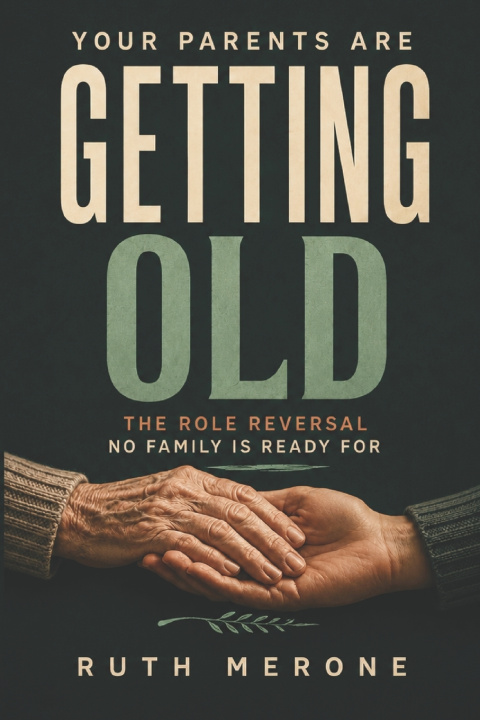
Your Parents Are Getting Old is a calm, clear-eyed guide to the role reversal no family is ready for.
Ruth Merone writes for the adult child standing in the strange middle place between love and responsibility, guilt and frustration, tenderness and fear. Your parents are still your parents. But the balance is changing. And the conversations families avoid about money, driving, documents, safety, siblings, care, resentment, and decline become harder the longer everyone pretends they can wait.
This is not a medical manual. It is not an elder-law guide. It is not a sentimental tribute to family duty. And it is not a book that tells you love means losing your own life.
It is a steady companion for one of adulthood's most difficult transitions.
Inside, Merone helps readers face the questions that often arrive before the family is ready.
When is a small sign just a small sign, and when is it a pattern?
How do you raise concerns without humiliating a parent?
What happens when siblings disagree, disappear, or criticize from a distance?
How do you talk about money, documents, driving, and care before crisis makes the decisions for you?
How do you help without becoming consumed?
With warmth, honesty, and emotional precision, this book restores two truths families often struggle to hold at the same time.
Aging parents deserve dignity.
Adult children are allowed to have limits.
Care is love in action. Self-erasure is not proof of love.
Your Parents Are Getting Old gives language to the moment many families feel but do not know how to name. It helps you stop waiting for the hospital hallway version of the family to appear. It helps you speak earlier, plan more gently, notice without panic, and love without pretending.
You cannot make them young again.
But you can stop meeting the future unprepared.