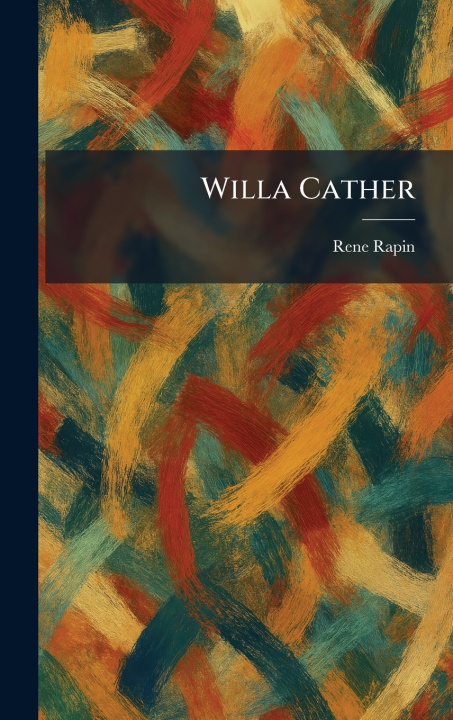
"Willa Cather" by Rene Rapin is an insightful critical study that examines the life and literary output of one of the most significant American novelists of the early 20th century. Written and published while Cather was still actively producing major works, this volume provides a contemporary perspective on her artistic evolution and her unique place in the American literary landscape. Rapin explores the themes of pioneer life, the struggle of the artist, and the deep connection to the land that define Cather's most celebrated novels, such as "O Pioneers!", "My Ántonia", and "Death Comes for the Archbishop".
Through a careful analysis of her prose style and narrative structure, the work highlights Cather's departure from the prevailing realism of her time in favor of a more evocative and disciplined aesthetic. Rapin offers readers an essential framework for understanding how Cather's Midwestern upbringing and European sensibilities merged to create a new kind of American mythos. This study is a valuable resource for students of American literature and admirers of Cather's work, offering a foundational look at the critical reception of an author whose legacy continues to resonate for her profound depictions of the human spirit and the changing American frontier.
This work has been selected by scholars as being culturally important, and is part of the knowledge base of civilization as we know it. This work was reproduced from the original artifact, and remains as true to the original work as possible. Therefore, you may see the original copyright references, library stamps (as most of these works have been housed in our most important libraries around the world), and other notations in the work.
This work is in the public domain in the United States of America, and possibly other nations. Within the United States, you may freely copy and distribute this work, as no entity (individual or corporate) has a copyright on the body of the work.
As a reproduction of a historical artifact, this work may contain missing or blurred pages, poor pictures, errant marks, etc. Scholars believe, and we concur, that this work is important enough to be preserved, reproduced, and made generally available to the public. We appreciate your support of the preservation process, and thank you for being an important part of keeping this knowledge alive and relevant.