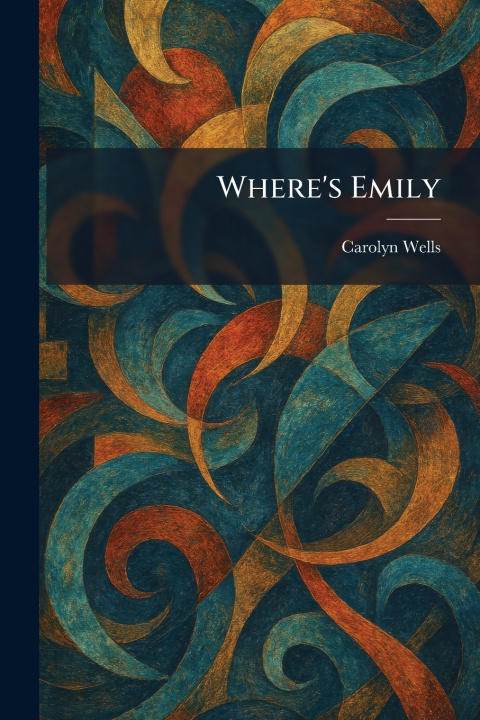
"Where's Emily" is a compelling Golden Age mystery featuring the renowned detective Fleming Stone. The narrative centers on the sudden and inexplicable disappearance of Emily Fane, who vanishes from her home just as she is preparing for her wedding. The event leaves her family and the wedding party in a state of utter confusion and distress, as no one can account for how she could have slipped away unnoticed from a house full of people.
As the investigation stalls, the brilliant investigator Fleming Stone is brought in to unravel the mystery. He must navigate a complex landscape of family dynamics, hidden motives, and subtle clues that others have overlooked. Stone's keen intellect and methodical approach are put to the ultimate test as he searches for the truth behind Emily's fate. Written by the prolific Carolyn Wells, "Where's Emily" is a classic example of early twentieth-century detective fiction, offering a sophisticated puzzle that maintains suspense until the very end. This work highlights Wells's talent for creating atmospheric mysteries and intricate plots that define the traditional detective genre.
This work has been selected by scholars as being culturally important, and is part of the knowledge base of civilization as we know it. This work was reproduced from the original artifact, and remains as true to the original work as possible. Therefore, you may see the original copyright references, library stamps (as most of these works have been housed in our most important libraries around the world), and other notations in the work.
This work is in the public domain in the United States of America, and possibly other nations. Within the United States, you may freely copy and distribute this work, as no entity (individual or corporate) has a copyright on the body of the work.
As a reproduction of a historical artifact, this work may contain missing or blurred pages, poor pictures, errant marks, etc. Scholars believe, and we concur, that this work is important enough to be preserved, reproduced, and made generally available to the public. We appreciate your support of the preservation process, and thank you for being an important part of keeping this knowledge alive and relevant.