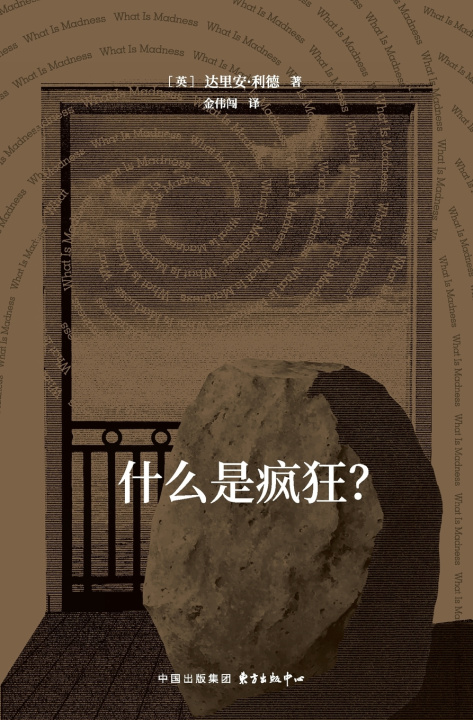
A landmark work by a leading Lacanian scholar, revealing the entanglement of madness and civilization, and capturing the hidden moments of madness in everyday life.
拉康派重要学者代表作,揭示疯癫与文明的交织, 捕捉日常生活中隐秘的疯狂时刻
Madness is erratic behavior, emotional turbulence, tangled thoughts.
Madness is losing control, an unpredictable threat.
Madness is a mental illness that must be isolated and cured.
For centuries, we have treated madness as an exception - a condition that afflicts only a few "abnormal" individuals. But in What Is Madness?, Lacanian psychoanalyst Darian Leader draws on a wealth of clinical cases to offer a radically different view: madness is a shared human experience. It is not always a symptom of illness; rather, it may be our mind's way of resolving deep-seated conflict. Nor does it always announce itself in dramatic outbursts - more often, it quietly intertwines with everyday life. Beneath these "quiet madnesses" lie quiet attempts at self-healing. Between madness and civilization, learning to face the inner storms we all carry is an essential lesson in being human.
疯狂是行为的反常、情绪的波动、思维的混乱;
疯狂是无法自控的挣扎、难以预测的危险;
疯狂是迫切需要被隔离、被救治的精神疾病;
......
长久以来,人们将疯狂视为一种例外,认为那只是少数"非正常人"面临的困境。然而,在《什么是疯狂?》中,精神分析师达里安·利德借由丰富的案例,提出了新的观点:疯狂是人类共同的生命经验,它并不一定是精神疾病的症状,而是我们解决内心冲突的方式;疯狂也并不总是伴随着剧烈的情感爆发,相反,它往往与正常生活无缝地交织在一起,而这些"安静的疯狂"背后,则潜藏着个体自我修复的尝试。在疯狂与文明之间,学会直面内心无声的风暴,才是每个人必修的心理课。