Carte Unsettling Accounts Leigh A. Payne

Unsettling Accounts

Neither Truth Nor Reconciliation in Confessions of State Violence

Limbă: engleză
Legare: Copertă tare
Disponibilitate: șansă 50%
Şanse de a obține acest titlu
740.17 lei
An Argentine naval officer remorsefully admits that he killed thirty people during Argentina's Dirty...


Informații despre carte

Limbă
engleză
Legare
Carte - Copertă tare
Publicat
2008
Pagini
392
EAN
9780822340614
Enbook ID
04938596
Greutate
684

Descriere completă

An Argentine naval officer remorsefully admits that he killed thirty people during Argentina's Dirty War. A member of General Augusto Pinochet's intelligence service testifies before a Chilean truth commission, taking sadistic pleasure in recounting the sexual torture of women in clandestine prisons. A Brazilian military officer draws on his own experiences to write a novel describing the military's involvement in a massacre during the 1970s. The head of a police death squad refuses to become the scapegoat for apartheid-era violence in South Africa; he begins to name names and provide details of past atrocities. Focusing on these and other confessions to acts of authoritarian state violence, Leigh A. Payne asks what happens when perpetrators publicly admit or discuss their actions. While mechanisms such as South Africa's Truth and Reconciliation Commission are touted as means of settling accounts with the past, Payne contends that public confessions do not settle the past. They are unsettling by nature. Rather than reconcile past violence, they catalyze contentious debate. She argues that this debate - and the public confessions that trigger it - are healthy for democratic processes of political participation, freedom of expression, and contestation of political ideas. Payne draws on interviews, unedited television film, newspaper archives, and books written by perpetrators to analyze confessions of state violence in Argentina, Chile, Brazil, and South Africa. Each of these four countries addressed its past through a different institutional forms, from blanket amnesty, to conditional amnesty based on confessions, to judicial trials. Payne considers perpetrators' confessions as performance, examining what perpetrators say and what they communicate non-verbally; the timing, setting, and reception of their confessions; and the different ways that the perpetrators portray their pasts, whether in terms of remorse or heroism, denial or sadism, or through lies or betrayal.

S-ar putea să te intereseze

333.62 lei

Clienții care au cumpărat această carte au mai cumpărat și

136.38 lei
124.61 lei

Das Versprechen

Friedrich Dürrenmatt
73.72 lei
111.03 lei

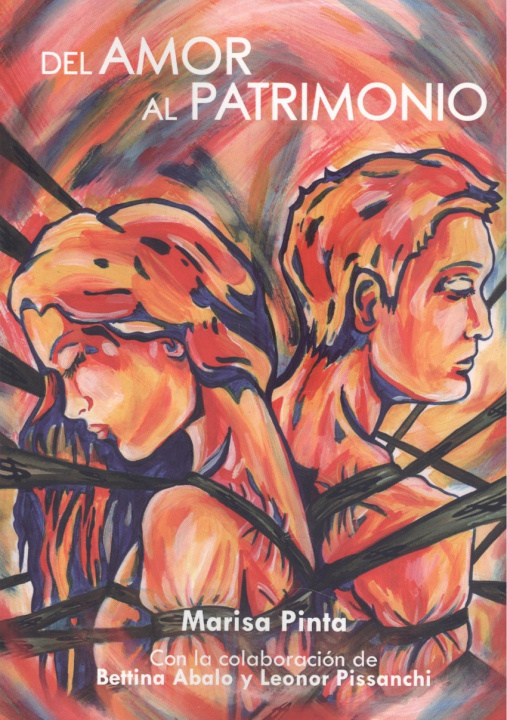
Del amor al patrimonio

MARISA PINTA GARCIA
75.02 lei
140.10 lei