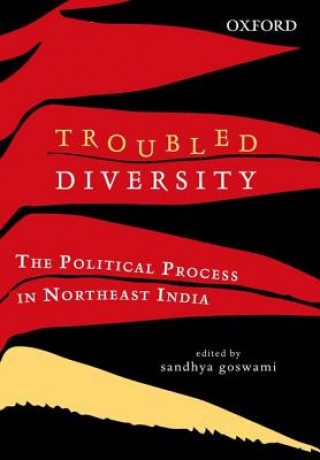
Diversity as a social fact always existed in the world at large but it becomes a problem when it exists within the territory of a state or when the cultural or racial differences become the basis of group inequality or when the different groups perceive one another as threat to their identity. The nature of diversity in India's Northeast represents bewildering mosaics of different collective identities-religious, linguistic, ethnic-that overlap and cut across one another in innumerable ways. The intensification of identity politics centering around ethnicity is one of the distinguishing features of the recent political history of Northeast India. For creating and consolidating its respective identities every ethnic group makes an effort to construct its 'other'. As the number of identities increase the list of others also multiplies. The logic of the 'other' is always seen in relation to the community to which s/he belongs. 'The other is the one who has come to dominate and exploit. The ideology of 'the other' motivates and guides identity politics in Northeast India. The atmosphere of mistrust generated by fears of domination and vengeance over one group by another has been heightened in the wake of various ethnic conflicts in Northeast India in the past few years. Moreover, the cultural processes, values, and practices of ethnic groups are increasingly becoming political resources for elites in competition for political power or economic advantage. They become symbols and referents for the identification of members of the group which are called up in order to create a political identity more easily. The well-researched chapters in this volume provide valuable insights into factors that contribute to the turbulent conflict situation in the peripheral regions such as the Northeast and Kashmir.