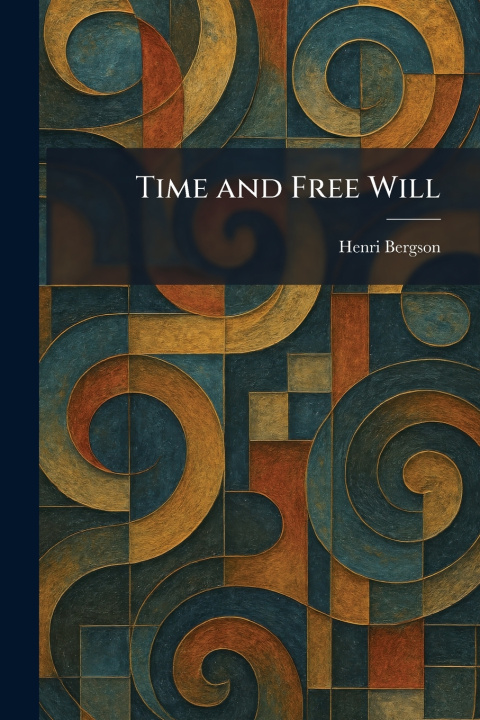
"Time and Free Will" is a landmark work of philosophical inquiry that addresses the complex relationship between human consciousness and the nature of time. The text investigates the distinction between mathematical time-a spatialized, measurable concept-and "duration," which is the continuous, indivisible flow of lived experience. By examining the immediate data of consciousness, the author argues that the mechanics of physical laws cannot fully account for the internal states of the human mind.
Central to the work is a vigorous defense of human agency against the constraints of psychological determinism. The author contends that free will is not a mere illusion but a fundamental aspect of the soul's spontaneity when acting within the realm of pure duration. Through an analysis of intensity, movement, and the organization of conscious states, the book offers a transformative perspective on how we perceive our own existence and choices.
As a significant contribution to metaphysics and psychology, "Time and Free Will" challenges readers to reconsider their understanding of causality and the self. It remains an essential read for those interested in the philosophical foundations of intuition and the deep mysteries of the temporal experience.
This work has been selected by scholars as being culturally important, and is part of the knowledge base of civilization as we know it. This work was reproduced from the original artifact, and remains as true to the original work as possible. Therefore, you may see the original copyright references, library stamps (as most of these works have been housed in our most important libraries around the world), and other notations in the work.
This work is in the public domain in the United States of America, and possibly other nations. Within the United States, you may freely copy and distribute this work, as no entity (individual or corporate) has a copyright on the body of the work.
As a reproduction of a historical artifact, this work may contain missing or blurred pages, poor pictures, errant marks, etc. Scholars believe, and we concur, that this work is important enough to be preserved, reproduced, and made generally available to the public. We appreciate your support of the preservation process, and thank you for being an important part of keeping this knowledge alive and relevant.