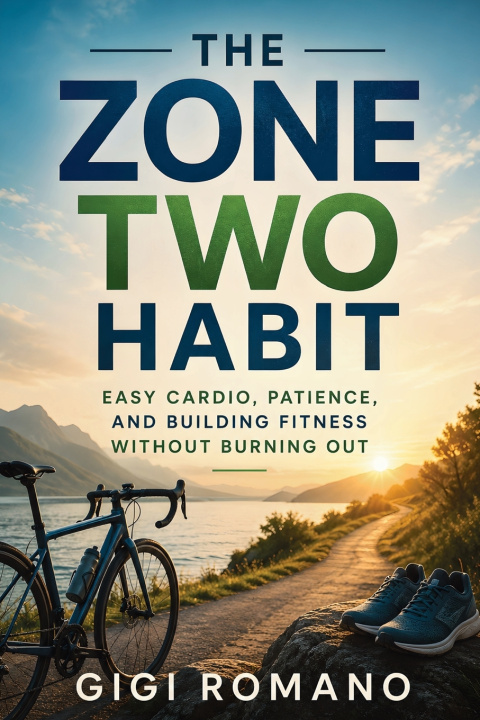
The Zone Two Habit is a clear, practical guide to building fitness through easier, steadier cardio. Instead of treating exercise as punishment, exhaustion, or a test of toughness, this book explains how low-intensity aerobic training can help develop endurance, consistency, and confidence without burning out. It shows why walking, cycling, rowing, swimming, slow jogging, hiking, and other controlled forms of movement can be valuable when performed at the right effort.
Written in a polished, fact-based, easy-to-read style, the book explains heart-rate zones, the talk test, aerobic metabolism, recovery, nutrition, sleep, strength training, and the role of harder workouts without turning fitness into something intimidating. It is designed for beginners, busy adults, older adults, returning exercisers, recreational athletes, and anyone who wants a sustainable way to become fitter without making every session a battle.
With a focus on patience, repeatability, and real-life routines, The Zone Two Habit offers a calmer approach to endurance health. It helps readers understand how easier cardio can become a lifelong habit: one that supports daily energy, aerobic capacity, confidence, and long-term movement without relying on extremes.
Disclaimer
This book is intended for general educational and informational purposes only. It is not medical advice, diagnosis, treatment, rehabilitation guidance, or a substitute for consultation with a qualified healthcare professional. Readers with heart disease, high blood pressure, diabetes, respiratory conditions, injuries, pregnancy, dizziness, chest pain, fainting, medication affecting heart rate, or any other health concern should seek professional medical guidance before beginning or changing an exercise routine.
This is an independent book and is not affiliated with, sponsored by, authorised by, or endorsed by any fitness brand, wearable-device company, health organisation, training platform, app developer, gym chain, equipment manufacturer, or sporting body. Any general references to exercise methods, heart-rate zones, watches, machines, bikes, rowing machines, treadmills, or training tools are used descriptively only. All trademarks, product names, brand names, and organisation names belong to their respective owners.