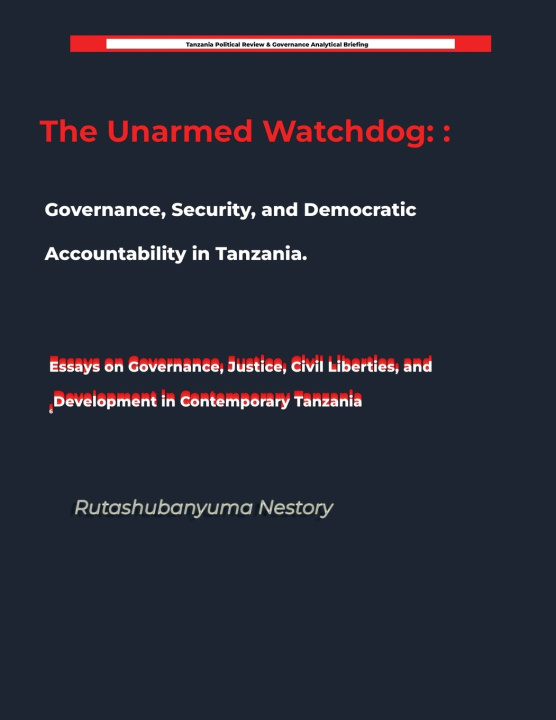
In The Unarmed Watchdog: Governance, Security, and Democratic Accountability in Tanzania, Rutashubanyuma Nestory presents a powerful collection of essays examining the state of governance, law, and democracy in contemporary Tanzania. Written during a period of heightened political tension and institutional contestation, the book offers a close analytical reading of how public power is exercised, contested, and experienced across multiple sectors of society.
Through carefully grounded case studies and institutional analysis, the author explores critical questions of judicial independence, law enforcement accountability, political competition, civic space, and public service delivery. Each essay situates specific events within broader structural and constitutional contexts, revealing how governance outcomes are shaped less by isolated incidents than by deeper institutional dynamics.
At the heart of the book lies a central concern: the relationship between state institutions and public trust. When institutions are perceived as transparent, impartial, and accountable, democratic governance is strengthened. When they are seen as politicized or opaque, legitimacy is weakened and civic confidence erodes. Across its chapters, the book traces this tension through legal disputes, security governance, infrastructure policy, and public discourse.
The volume also examines the growing influence of religious leaders, civil society actors, and digital media in shaping political narratives and accountability debates. It highlights how information flows, competing claims, and credibility struggles increasingly define the political environment, reflecting broader challenges of trust and legitimacy in the digital age.
While focused on Tanzania, the book engages wider African and global debates on democratization, state capacity, and development governance. It avoids simplistic conclusions, instead offering a structured, evidence-informed reflection on the complexities of governing under conditions of political change and institutional stress.
The Unarmed Watchdog will appeal to readers interested in African politics, constitutional governance, public policy, law, and democratic development. It is both a diagnostic account of contemporary governance challenges and a reflective contribution to ongoing debates about accountability, institutions, and the future of democracy in Tanzania.