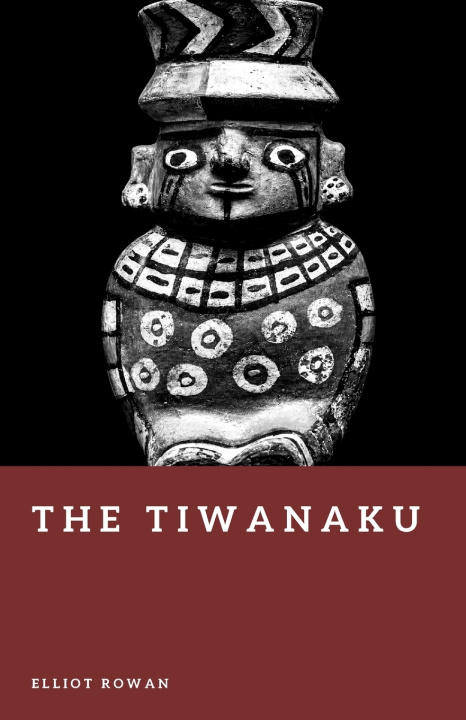
In The Tiwanaku: Builders of the High Andes, Elliot Rowan explores one of the great civilizations of ancient South America, a society that rose beside Lake Titicaca centuries before the Inca Empire. Across the windswept Altiplano and the mountain corridors of the southern Andes, the people of Tiwanaku built monumental temples, engineered sophisticated agricultural systems, and established a ceremonial center whose influence stretched across modern Bolivia, Peru, and northern Chile.
Drawing on archaeological discoveries from Tiwanaku, Akapana, Kalasasaya, and surrounding Andean sites, Rowan reconstructs a civilization known not through written chronicles, but through stone architecture, ritual art, environmental evidence, and the remains of cities buried for centuries beneath the high plateau. Massive carved monoliths and precisely fitted masonry reveal extraordinary engineering skill, while ceramics, textiles, and sacred imagery preserve traces of a world shaped by pilgrimage, celestial symbolism, and adaptation to one of the harshest inhabited environments on Earth.
Rowan examines the political, religious, and economic foundations of Tiwanaku society, tracing its expansion across the Andes, its relationship with the Wari civilization, and its lasting influence on later Andean cultures, including the Inca. More than the story of a lost civilization, this book reveals how Tiwanaku helped shape the spiritual and cultural world of the ancient Andes, leaving behind a legacy that endured long after its cities fell silent beneath the cold skies of the Altiplano.