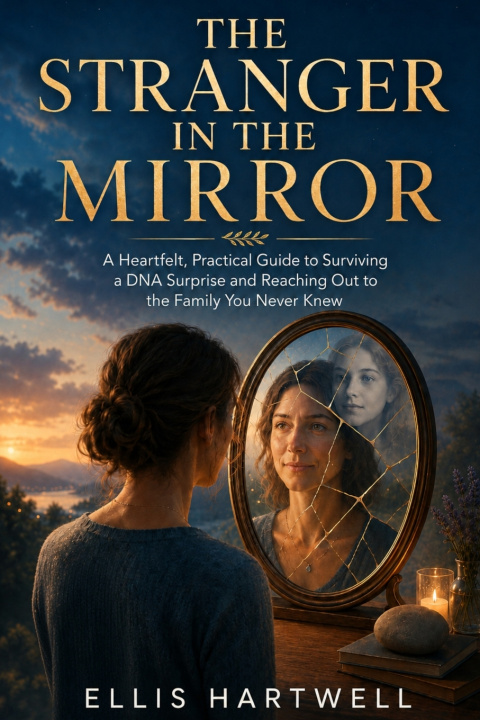
You spat in a tube for fun. You expected a pie chart of your heritage. Instead, a phone notification quietly rearranged your entire life: the father who raised you is not your biological father, or you were donor-conceived, or a half-sibling you never knew existed just appeared at the top of your match list. If you are living through a DNA surprise, an NPE discovery, or what the community calls a not-parent-expected or misattributed parentage experience, this is the compassionate, step-by-step guide you have been searching for at three in the morning.
Written by a fellow traveler who has walked this exact path, The Stranger in the Mirror understands the three emergencies a DNA surprise sets off at once: the identity earthquake of not knowing who you are anymore, the crushing isolation of people who say "does it really matter?", and the terrifying practical question of whether, when, and how to reach out to biological strangers. Most books help with only one. This one walks you through all three, in order, from the blindside of the first hours to an integrated, larger life.
Inside this in-depth guide to navigating an unexpected parentage and sibling discovery, you will find: plain-language help understanding your DNA test results, centimorgans, and shared matches so you can confirm the truth before you act; grounding tools for the shock, the insomnia, and the identity vertigo, with an honest explanation of what a bombshell does to your brain; permission and language to grieve the disenfranchised grief that nobody sends a casserole for; a clear framework for who to tell and when, and how to survive the well-meaning people who fumble the news; guidance for confronting, forgiving, or setting boundaries with the parents who raised you and kept the secret; a complete outreach toolkit with word-for-word first-message templates and scripts for a biological father, a half-sibling, a resistant relative, and the family gatekeeper; a preparation plan for every possible answer, whether the door opens, stays shut, or opens halfway; support for building new relationships with half-siblings and donor siblings without losing yourself; the practical medical family history side that suddenly matters for you and your children; special guidance for donor-conceived people and the donor sibling pod; and a long-arc path to rebuilding a coherent identity and finding meaning on the far side of the surprise.
This is more than a memoir and more than a science explainer. It is a warm, honest, and genuinely useful survival guide for anyone processing a consumer DNA test surprise, an unexpected paternity discovery, an unknown sibling, or a late-discovery donor conception. Whether you are deciding to search, drafting your first message, or trying to feel whole again, you do not have to do this alone, and you do not have to do it without a map.
The floor tilted. You are still standing on it. Let this book show you the way through.