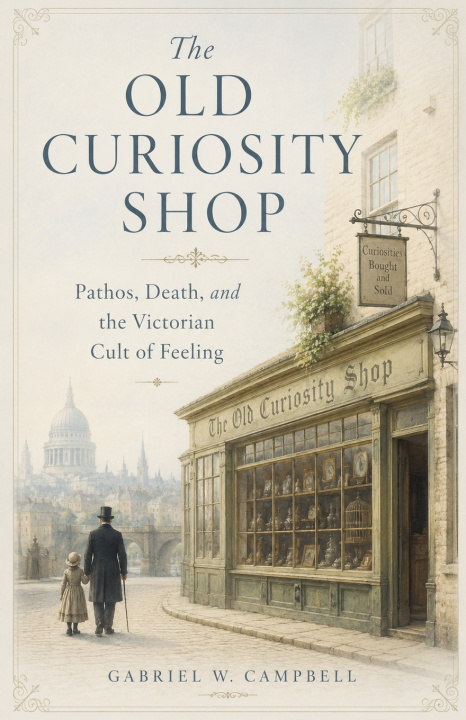
The story of The Old Curiosity Shop has long occupied a paradoxical place in the landscape of Victorian literature. Few nineteenth‑century novels provoked such intense emotional response, and few have been so persistently mocked for the very sentiment that once made them beloved. To approach this novel today is to enter a contested emotional terrain, one shaped by the tears of its earliest readers, the derision of later critics, and the ongoing scholarly effort to understand how feeling operated as a cultural force in the Victorian imagination. This book argues that The Old Curiosity Shop is not simply a sentimental artifact but a crucial text for understanding the nineteenth century's emotional regime-its anxieties, its aspirations, and its moral investments. Through the intertwined themes of pathos, death, and the Victorian cult of feeling, the novel becomes a lens through which to examine how a culture constructed, circulated, and policed emotional experience.