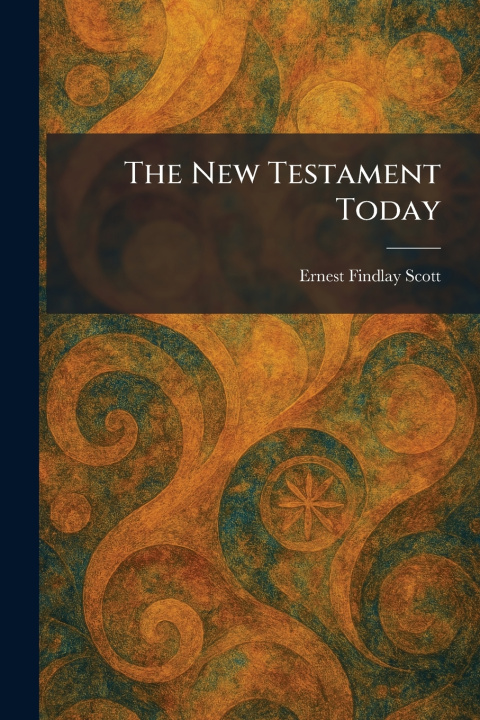
"The New Testament Today" is a profound exploration of the enduring relevance and scholarly interpretation of the New Testament in the modern era. Written by the distinguished theologian Ernest Findlay Scott, this work examines the historical and spiritual significance of the foundational texts of Christianity through the lens of early 20th-century biblical criticism. Scott addresses the central questions surrounding the life of Jesus, the development of the early church, and the theological messages that continue to resonate with contemporary readers.
The book serves as an essential guide for those seeking to understand how historical inquiry and spiritual faith intersect. It delves into the literary nature of the Gospels and Epistles, providing a clear overview of the scholarly consensus of the time while maintaining a deep respect for the religious impact of the scriptures. "The New Testament Today" offers a balanced perspective on the evolution of Christian thought, making it a valuable resource for students of theology, historians of religion, and lay readers interested in the historical foundations of their faith. By emphasizing the permanent values found within the New Testament, Scott ensures that the work remains a significant contribution to the field of biblical studies.
This work has been selected by scholars as being culturally important, and is part of the knowledge base of civilization as we know it. This work was reproduced from the original artifact, and remains as true to the original work as possible. Therefore, you may see the original copyright references, library stamps (as most of these works have been housed in our most important libraries around the world), and other notations in the work.
This work is in the public domain in the United States of America, and possibly other nations. Within the United States, you may freely copy and distribute this work, as no entity (individual or corporate) has a copyright on the body of the work.
As a reproduction of a historical artifact, this work may contain missing or blurred pages, poor pictures, errant marks, etc. Scholars believe, and we concur, that this work is important enough to be preserved, reproduced, and made generally available to the public. We appreciate your support of the preservation process, and thank you for being an important part of keeping this knowledge alive and relevant.