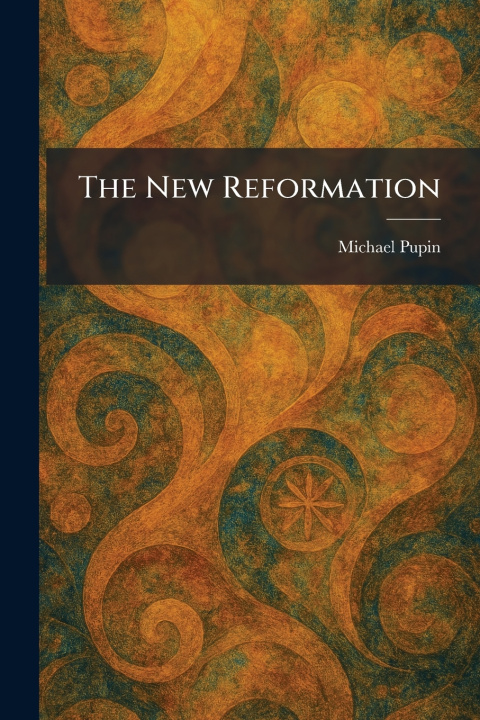
"The New Reformation" explores the profound relationship between the advancements of physical science and the spiritual life of humanity. Written by the distinguished physicist and inventor Michael Pupin, this work argues that the evolution of scientific knowledge-from the classical mechanics of Archimedes and Newton to the modern breakthroughs of Faraday and Maxwell-does not diminish the significance of spiritual reality. Instead, Pupin suggests that the scientific discovery of cosmic order points toward a higher creative spirit.
The book examines how the "new reformation" in scientific thought provides a deeper understanding of the universe, effectively bridging the gap between the material world and the divine. By tracing the historical development of physical concepts and the law of continuity, Pupin illustrates how scientific progress enhances our appreciation for the mysteries of existence. This work serves as an intellectual and optimistic meditation on how the pursuit of physical truth can complement a religious outlook, making it a significant contribution to the early 20th-century dialogue between science and faith. "The New Reformation" remains an essential text for those interested in the philosophical implications of scientific discovery and the harmony between reason and belief.
This work has been selected by scholars as being culturally important, and is part of the knowledge base of civilization as we know it. This work was reproduced from the original artifact, and remains as true to the original work as possible. Therefore, you may see the original copyright references, library stamps (as most of these works have been housed in our most important libraries around the world), and other notations in the work.
This work is in the public domain in the United States of America, and possibly other nations. Within the United States, you may freely copy and distribute this work, as no entity (individual or corporate) has a copyright on the body of the work.
As a reproduction of a historical artifact, this work may contain missing or blurred pages, poor pictures, errant marks, etc. Scholars believe, and we concur, that this work is important enough to be preserved, reproduced, and made generally available to the public. We appreciate your support of the preservation process, and thank you for being an important part of keeping this knowledge alive and relevant.