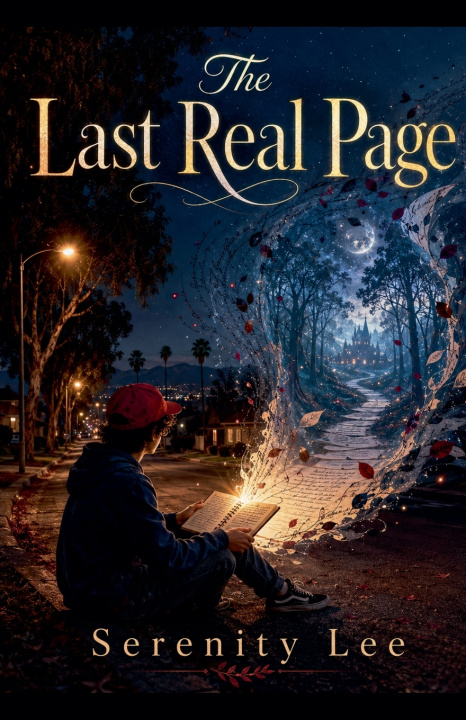
Denny McGehin has a defect. He sees through everything. Every performance, every corporate gratitude meeting where adults close their eyes on command and show their real exhaustion for thirty seconds before snapping the masks back in place. Every kitchen island conversation performing family. Every freeway face driving the same route to nowhere. He's seventeen, graduated early, and three weeks into an internship that curdled on day one, and he can't wear the face anymore.
So he quits. Hands back the lanyard. Takes the surface streets instead of the 215.
That's when he sees her - red hair, green eyes, crouched on Indian Street watching a snail with the kind of total attention he hasn't witnessed in years. She says three words that change everything: "Real ones only."
What begins as a connection between two people who notice the gap between performing and being becomes something vastly larger. Ara is not entirely from his world. She's a Storywalker from The Verdant, a realm made of living stories and honest imagination - and it's dying. The performance suffocating the Inland Empire has infected her world. White voids are erasing color and meaning. And Denny, with his defective eye for seeing through cap and his black notebook of raw observations, might be the Last Real One: the bridge who could push back the Hollowing.
But realness isn't a contest. It's not a savior story. And the real work - the thing that actually holds back the erasure - turns out to be smaller and harder than any epic: choosing connection on a porch with your sister, letting your father's mask slip at the kitchen island, writing honest even when you're terrified. The sprinklers catching gold. The pepper berries. The small persistent things that matter.
The Last Real Page is a literary YA paranormal novel about the architecture of authenticity in a world drowning in performance, told by a boy in a red cap learning that there's no Last Real One - just people choosing to pay attention, one small true thing at a time.
For readers of John Green, Paul Auster's New York Trilogy, and A Deadly Education - a story about the defect of seeing clearly and the courage it takes to stay real without turning it into another mask.