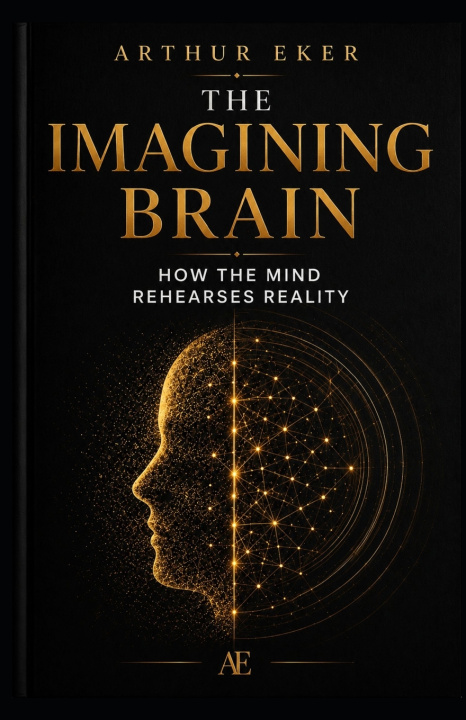
THE IMAGINING BRAIN
How the Mind Rehearses Reality
Why do we suffer over events that have not yet happened? Why do certain fears, memories, and emotional patterns seem to shape our lives long after the original experience has passed? And why does the human mind spend so much time imagining futures that may never arrive?
In The Imagining Brain, Arthur Eker explores one of the most fascinating discoveries of modern neuroscience: the brain is not simply reacting to reality-it is constantly predicting, rehearsing, and interpreting it.
Drawing from neuroscience, psychology, cognitive science, and human behavior, this thought-provoking book reveals how imagination influences emotion, attention, perception, identity, and decision-making. It examines the invisible processes through which repeated thoughts become expectations, expectations shape behavior, and behavior gradually reinforces the stories people tell themselves about who they are.
Readers will discover:
• How the brain uses mental simulation to anticipate the future
• Why anxiety often functions as imagination trained toward catastrophe
• The science of neuroplasticity and how repeated experiences reshape neural pathways
• How attention filters reality and influences emotional well-being
• Why emotional memories continue affecting present-day decisions
• The hidden role of internal narratives in shaping identity
• How beliefs become embodied and feel like unquestionable truth
• The relationship between perception, expectation, and psychological suffering
• Why mental rehearsal can be both a powerful tool for growth and a source of chronic stress
• Practical insights for developing greater awareness, resilience, and emotional flexibility
Unlike simplistic self-help approaches that promise instant transformation, The Imagining Brain offers a realistic and scientifically grounded exploration of how the mind works. It does not rely on magical thinking, toxic positivity, or motivational clichés. Instead, it provides a deeper understanding of the mechanisms that shape human experience and the ways those mechanisms can gradually change.
Through engaging examples, accessible explanations, and profound reflections on human nature, Arthur Eker demonstrates how the brain learns through repetition, how attention shapes subjective reality, and how the stories we repeatedly rehearse influence the lives we ultimately create.
This book is for readers interested in neuroscience, psychology, personal development, emotional intelligence, cognitive science, mindfulness, mental health, self-awareness, human behavior, and the science of change.
If you have enjoyed books exploring neuroplasticity, emotional resilience, cognitive biases, attention, habits, and the psychology of human transformation, The Imagining Brain offers a compelling journey into the invisible architecture of the mind.
Because long before life changes on the outside, it is often rehearsed within the mind.