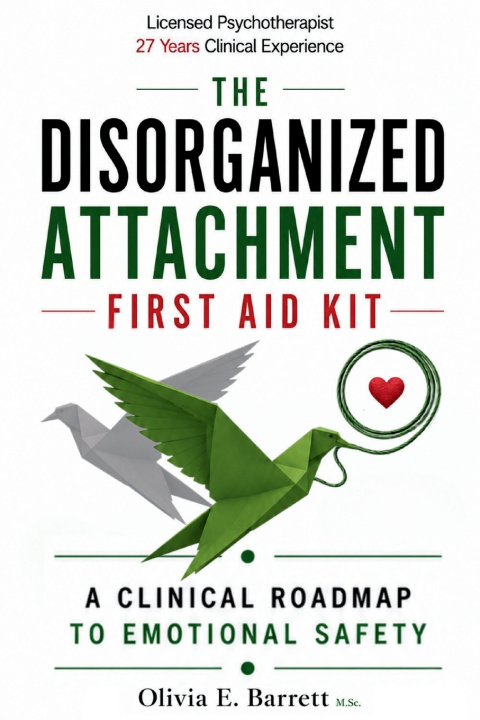
You want closeness. And the moment it arrives, something in you pulls away.
You push people away and then panic when they go. You find relationships that feel calm and leave them for ones that feel electric, even when electric means painful. You want to trust, but trust has never felt safe. You have read about attachment styles, taken the quizzes, recognized yourself in the description, and you still cannot stop repeating the patterns.
You have not failed the work. The work has not yet reached the right level.
By the time you finish this book, you will:
- Understand why disorganized attachment is not a flaw or a diagnosis, but a survival response your nervous system built when love and fear arrived together
- Recognize your specific triggers before they pull you into collapse or chaos, so you can intervene earlier and with more precision
- Use grounding and regulation tools designed for the particular intensity of disorganized responses, not generic anxiety techniques that were never built for this
- Begin to feel safer in your own body, which is the foundation everything else depends on
- Move toward relationships with more steadiness, not because you have erased the past, but because you have learned to work with it
The Disorganized Attachment First Aid Kit is not a complete therapeutic journey. It is what the title says: first aid.
A clinical stabilization guide for the moments when your system is overwhelmed and you need tools that actually match the intensity of what you are experiencing.
Drawing on nearly three decades of clinical work with trauma and attachment, psychologist and psychotherapist Olivia E. Barrett M.Sc. built this book around one core insight: disorganized attachment is a nervous system pattern, not a personality defect. And that means the entry point is not insight alone. It is regulation first, then understanding, then change.
What this book covers:
The neuroscience of disorganized attachment. A clear explanation of what happens in the brain and body when love and threat become fused in early life, and why this creates the approach-avoidance conflict that confuses you and the people who care about you.
The First Aid Framework. A structured, step-by-step stabilization sequence to use when you are triggered, flooded, or dissociating, designed to bring your nervous system back into a window where healing is possible.
Body-based regulation tools. Somatic techniques calibrated for the specific shutdown and hyperactivation states that characterize disorganized responses, because thinking your way through this will never be enough on its own.
Relational repair basics. How to begin building safety with others without requiring yourself to be fully healed first, and how to communicate your needs during a nervous system crisis.
The bridge to deeper work. How to use what this book gives you as preparation for longer-term therapy, including what to look for in a trauma-informed clinician and how to make the most of that work when you find it.
Stabilization is not the end of the road. But you cannot begin the road without it.
This is your first step.