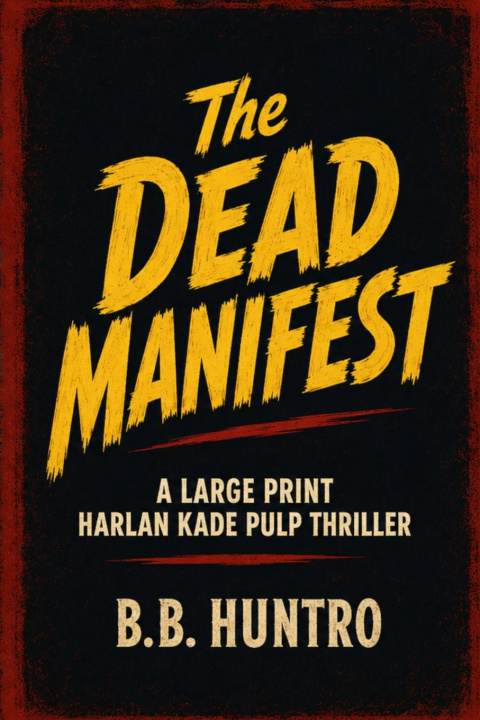
A dead private eye. A burned scrap of paper. A charity shipment that should never have existed.
Los Angeles, 1955. Private investigator Harlan Kade knows a staged death when he reads one in the morning paper. Eddie March, a fellow P.I. and occasional rival, has been found dead beneath a Long Beach pier with his pockets turned out and saltwater in his lungs. The police call it robbery. Kade calls it unfinished business.
March was too careful to die cheap. If he went to Pier Seven at midnight, he went there chasing a case.
The only person who may know what March found is his frightened secretary, Ruth Bell, who comes to Kade with a dented brass lighter, a burned appointment scrap, and a warning March left behind: if they come for the red file, take the lighter to Kade.
The scrap gives Kade three pieces of trouble: P7. Tobin. 11:30.
That is enough to pull him into the Long Beach docks, where freight labels lie, dock clerks disappear, and charity crates move through the night under names clean enough for newspaper photographs. What begins as a dead detective's last case becomes a trail of carbon copies, altered manifests, bus locker claims, freight receipts, and frightened witnesses who know too much to live long.
Kade follows March's trail from a depot locker to Pier Seven, from a freight office to a bonded warehouse, and from a respectable relief charity to the cold rooms where mercy is repacked for profit. Inside the white-painted crates are not blankets for clinics and orphanages. They are stolen morphine, surgical ether, penicillin, and black-market medical goods worth enough to make murder look like bookkeeping.
Standing between Kade and the truth are men with clean offices and dirty hands: a dockside brute with a weighted glove, a freight expediter who can make cargo change names, a lawyer who turns murder into paperwork, and a polished charity chairman who smiles for cameras while dead men sign manifests after dark.
Kade has no badge, little money, cracked ribs, and one narrow code: dead men should not be turned into convenient lies.
To solve March's murder, he must keep one frightened secretary alive, find the clean carbon copy March died protecting, and prove that a dead dock clerk signed a shipment after he was already in the morgue. But the closer Kade gets to the final manifest, the harder the case hits back. Witnesses vanish. Evidence burns. March's missing revolver turns up where it can ruin Kade. And the final truth waits in a Long Beach cold-storage room where charity labels peel, crates split open, and the lie finally bleeds.
The Dead Manifest is a fast, hardboiled large print pulp thriller filled with 1950s Los Angeles grit, dockside corruption, analog clues, brutal fights, crooked paper, and one battered private investigator determined to drag a dead man's truth into daylight.
Perfect for readers who enjoy:- Hardboiled private investigator fiction
- 1950s Los Angeles noir
- Large print mystery and thriller editions
- Fast-paced pulp crime novels
- Dockside smuggling stories
- Analog detective work with ledgers, carbon copies, payphones, and paper trails
- Bruised heroes, corrupt businessmen, dangerous women, and violent final showdowns
Large Print EditionThis edition is formatted in large print for easier reading, with short chapters, clean pacing, and a page-turning pulp structure designed for readers who want a sharp, physical thriller that moves fast and hits hard.