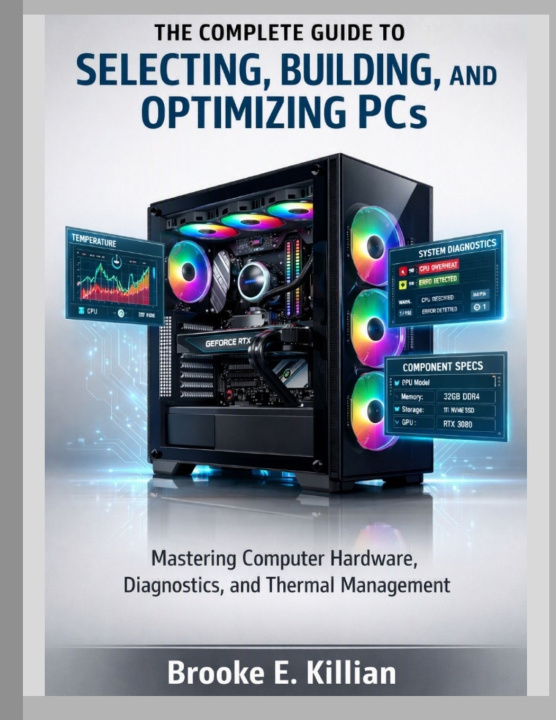
Have you ever opened up a new computer case, stared at the empty motherboard tray, and wondered if you're about to make a very expensive mistake?
You're not alone. Every builder, no matter how experienced, has stood in that exact spot at least once. The good news is that building, optimizing, and maintaining your own computer isn't reserved for engineers or industry insiders. It's a skill anyone can learn, provided the right information is explained clearly, in the right order, without unnecessary jargon getting in the way.
That's exactly what this book sets out to do.
Do you know why your current computer struggles under heavy use, even though it "should" be powerful enough?
Most performance problems people blame on old age or bad luck actually come down to a handful of overlooked details: components that don't quite match, airflow that was never properly planned, or settings left on default when they should have been adjusted. This book walks you through exactly how to identify those issues, and more importantly, how to avoid creating them in the first place.
Are you trying to decide whether building your own PC is even worth it, compared to just buying one?
This book doesn't push you toward one answer. Instead, it lays out an honest, side-by-side comparison so you can make that decision based on your actual budget, your actual skill level, and your actual patience for troubleshooting, rather than a sales pitch. Once you've made that call, you'll find a complete, structured process for turning that decision into a working, reliable machine.
What's actually inside?
This guide takes you from the very first planning questions, what you need your computer to do, all the way through selecting compatible parts, physically assembling them, configuring your system correctly the first time, and keeping it running smoothly for years afterward. Along the way, you'll learn:
How to match components so no single part holds back the rest of your system How to avoid the compatibility mistakes that cause returns, delays, and wasted money A clear, repeatable process for physical assembly, from unboxing to first power-on How to read what your system is telling you when something goes wrong, instead of guessing The real science behind heat management, and how to keep your system cool, quiet, and stable How to safely unlock extra performance from your components without risking stability A practical, ongoing maintenance routine that extends your system's usable life significantly How to plan smart upgrades later, instead of replacing an entire system prematurely
Have you ever felt stuck between "beginner tutorials" that skip the reasoning, and technical manuals that assume you already know everything?
That gap is exactly where this book lives. Every recommendation comes with the reasoning behind it, so you're not just following steps blindly. You're building real understanding, the kind that still helps you five years from now, long after today's specific components have been replaced by newer ones.
Whether you're building your very first computer, upgrading a machine that's started falling behind, troubleshooting a system that isn't performing the way it should, or simply trying to understand your hardware well enough to make confident decisions, this book is written to meet you exactly where you are and walk with you from there.
So, are you ready to stop guessing and start understanding exactly what's happening inside your machine?
Your next computer, whether it's your first build or your fifth, deserves to be built on knowledge, not luck.