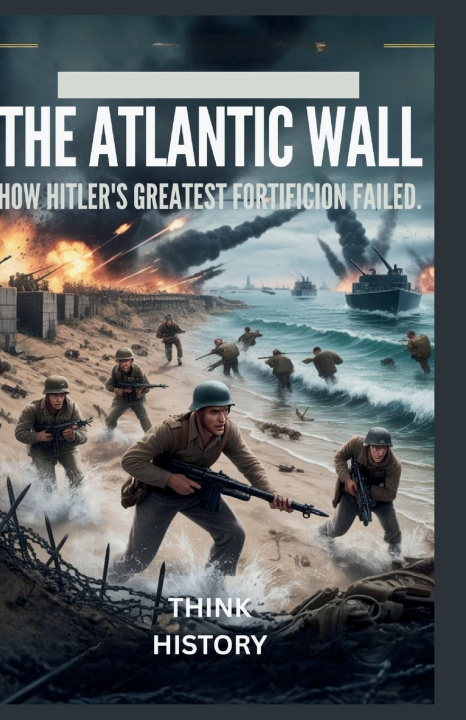
What if Hitler's greatest defensive masterpiece was doomed long before the first Allied soldier set foot on Normandy's beaches?
By 1944, Nazi Germany was bleeding on the Eastern Front, its armies in retreat and its leadership gripped by fear. Adolf Hitler placed his faith in concrete, steel, and miles of coastal fortifications stretching from Denmark to Spain-a vast barrier he believed would make Western Europe untouchable. It was called the Atlantic Wall, and in Hitler's mind, it was invincible.
It was not.
The Atlantic Wall: How Hitler's Greatest Fortification Failed uncovers the hidden cracks behind one of World War II's most ambitious defensive projects. Drawing readers into the tense months leading up to D-Day, this book reveals how fear, overconfidence, internal conflict, and fatal misjudgments quietly undermined Germany's last great shield in the West.
From early Allied raids that exposed German weaknesses, to the disastrous lessons of Dieppe, to the bitter power struggle between Rommel and von Rundstedt, the story unfolds as a slow-burn race against time. While Hitler obsessed over where the invasion might come, the Allies studied Normandy grain by grain, built floating harbors, laid fuel pipelines beneath the sea, and waged the most elaborate deception campaign in military history.
When the invasion finally came, it did not unfold as planned for either side. Some beaches fell quickly. Others, like Omaha, nearly ended in catastrophe. German confusion, delayed orders, shattered communications, and rigid command structures turned a formidable wall into a fragmented defense unable to respond with speed or unity.
Beyond the beaches, the fighting grew darker and more brutal-hedgerow battles, ruined cities, civilian massacres, and desperate attempts by German forces to escape encirclement. By the time Paris rose and France was liberated, the Atlantic Wall stood intact in places, yet utterly defeated in purpose.
This book is not just about bunkers and battles. It is about leadership under pressure, the danger of centralized control, the power of deception, and how wars are often lost long before the shooting starts.
If you are fascinated by World War II, military strategy, or the untold decisions that shaped history, this book will change how you see D-Day forever.