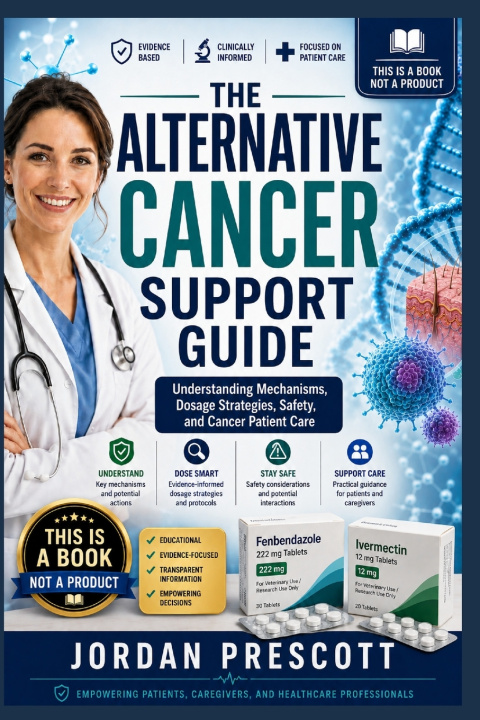
The Alternative Cancer Support Guide provides a balanced and educational exploration of supportive cancer care, integrative health strategies, patient advocacy, and emerging areas of scientific research. Designed for patients, caregivers, students, and healthcare readers, this book examines how supportive approaches can help individuals navigate the physical, emotional, and practical challenges associated with cancer while maintaining a strong commitment to evidence-based medicine.
A cancer diagnosis often leads individuals to seek information beyond conventional treatment options. Questions about nutrition, lifestyle, supportive care, quality of life, drug repurposing research, and patient-centered healthcare have become increasingly common. This guide offers a clear and accessible overview of these topics, helping readers better understand the scientific principles, safety considerations, and healthcare discussions that shape modern cancer support.
Inside this book, you'll discover:
- The foundations of modern cancer care and supportive oncology
- The role of integrative and supportive care in patient well-being
- Drug repurposing concepts and emerging areas of research
- Scientific evidence, research limitations, and responsible evaluation of healthcare claims
- Safety considerations, risk management, and dosage research principles
- Nutrition, lifestyle strategies, and quality-of-life support
- Patient advocacy, healthcare communication, and informed decision-making
- The importance of critical thinking when reviewing medical information
- Personalized care, supportive services, and future directions in oncology
- Practical approaches to navigating cancer care with confidence and awareness
Rather than promoting any specific treatment, therapy, medication, or protocol, The Alternative Cancer Support Guide encourages readers to develop a deeper understanding of how scientific evidence is evaluated and how supportive care can complement comprehensive cancer management. Through thoughtful discussion of patient experiences, healthcare communication, emerging research, and quality-of-life considerations, this book empowers readers to participate more confidently in healthcare conversations and decision-making.
Whether you are seeking a broader understanding of cancer support, interested in integrative healthcare discussions, or looking for a reliable introduction to patient-centered oncology care, this guide provides an informative and accessible resource grounded in education, critical thinking, and scientific awareness.
Educational Disclaimer
This book is intended for educational and informational purposes only. It does not provide medical advice, diagnosis, treatment recommendations, or healthcare instructions. The information presented should not be interpreted as an endorsement of any medication, supplement, therapy, protocol, or healthcare strategy. Readers should consult qualified healthcare professionals regarding medical conditions, treatment decisions, and healthcare concerns.