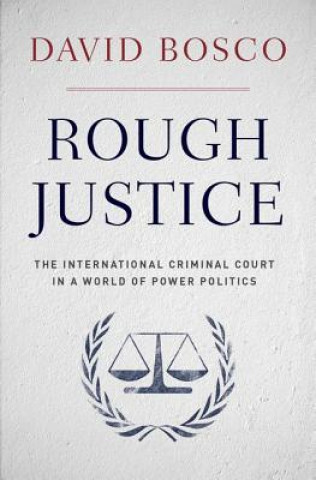
Carte Rough Justice David L Bosco

Rough Justice

Autor: David L Bosco
Limbă: engleză
Legare: Copertă tare
Disponibilitate: În depozitul extern
Expediem în 10-18 zile
253.66 lei
The Nuremberg trials after World War II constituted a landmark in the development of international c...


Informații despre carte

Limbă
engleză
Legare
Carte - Copertă tare
Publicat
2014
Pagini
312
EAN
9780199844135
ISBN
0199844135
Enbook ID
02520634
Greutate
556
Dimensiuni
233 x 165 x 26

Descriere completă

The Nuremberg trials after World War II constituted a landmark in the development of international criminal justice: presided over by jurists from the victorious powers, it set new standards for defining international war crimes. Set in motion shortly after the creation of the United Nations, the courts seemed to point toward a future in which the international community could more effectively prosecute crimes against humanity and advance the cause of justice and the rule of law throughout the world. However, the onset of the Cold War stymied all efforts to create an effective international criminal court. Neither the US nor the USSR was willing to face the possibility of being judged in a forum controlled by ideological adversaries. Despite the lack of progress, the dream of the court lived on through the 1980s, and when the Cold War ended, a new opportunity arose. After the UN's creation of temporary courts during the Balkan wars of the early 1990s, a powerful grassroots movement championing a permanent international criminal court emerged. Facing stiff resistance from the US and other powerful states, the movement triumphed against great odds. The court was established in 2002, and it now has the support of over 100 states (but not the US). The US opposes it outright and the Russians and Chinese are skeptical of it for a simple reason: as the most powerful states, they have no intention of surrendering jurisdictional authority over their own citizens to lesser powers. As a consequence, the court has faced numerous setbacks, and many have questioned whether it has any real power at all. It has ended up focusing its energies on pursuing war criminals in weak states, typically in Africa. It is now caught on the horns of a dilemma: to pursue justice, it does what it can where it can, but it cannot actually prosecute figures in powerful states. Russia will never surrender troops who may have acted badly in Georgia, and America is not about to hand over soldiers who killed civilians in Afghanistan. Yet the court has had some minor successes, and we should remember that it is still in its very early days. As the years pass, its jurisdictional authority may expand, and the norms that it advances may achieve the status of common sense. Time will tell. In Rough Justice, David Bosco tells the story of the movement to establish the court and its tumultuous first decade. He also considers its prospects for the future, especially the very real challenges that it faces. This is an authoritative account of an international institution that is prototypical of the post-Cold War era.

S-ar putea să te intereseze

Vaccines

Kristen A. Feemster
365.06 lei

Biopolymers II

Nikcholas A. Peppas
779.34 lei
633.45 lei
62.80 lei
690.31 lei

Adam and Eve's First Sunset

Sandy Eisenberg Sasso
77.02 lei
144.67 lei

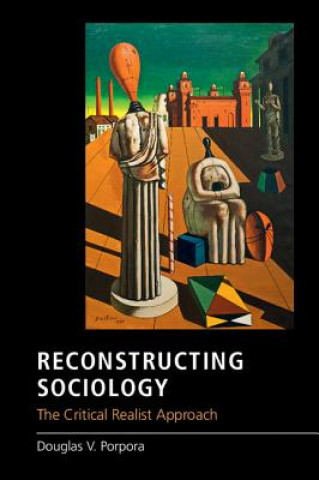
Reconstructing Sociology

Douglas V. Porpora
201.94 lei

Glinda of Oz

Frank L. Baum
180.76 lei
163.52 lei
75.61 lei

Kustenflieger

Adam Thompson
116.94 lei
249.02 lei

Intimate Enemies

Kathryn Batchelor
797.18 lei
48.69 lei

Inside IG Farben

Stephan H. Lindner
332.60 lei

Cell Senescence

Lorenzo Galluzzi
1 078.98 lei

Clienții care au cumpărat această carte au mai cumpărat și

278.36 lei

Človíček v trojobalu

Filip Jan Zvolský
36.29 lei

ROBIN HOOD SUITE PIANO

FREDERICK CURZON
162.51 lei
292.07 lei