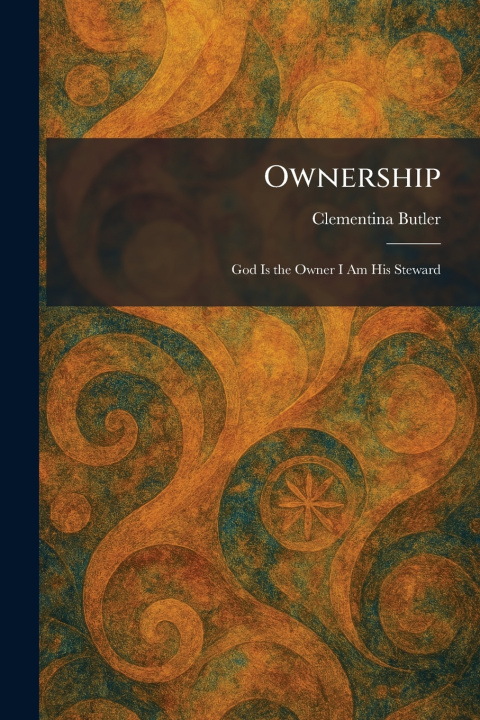
"Ownership: God Is the Owner I Am His Steward" is an insightful exploration of the theological principles of stewardship and the Christian's role as a caretaker of divine gifts. Written by the influential missionary and author Clementina Butler, this work presents a compelling case for a life lived in recognition of God's absolute ownership of all things, both material and spiritual.
The text serves as a spiritual guide, urging readers to evaluate their relationship with their possessions, time, and talents through the lens of faith. By framing human existence as a sacred trust, Butler provides a framework for meaningful service and ethical responsibility. The work is deeply rooted in scriptural tradition, offering practical and devotional insights intended to foster a spirit of humility and dedication. "Ownership: God Is the Owner I Am His Steward" continues to be a valuable resource for individuals and study groups seeking to deepen their commitment to Christian discipleship and to better understand the profound connection between faith and the management of one's life and resources.
This work has been selected by scholars as being culturally important, and is part of the knowledge base of civilization as we know it. This work was reproduced from the original artifact, and remains as true to the original work as possible. Therefore, you may see the original copyright references, library stamps (as most of these works have been housed in our most important libraries around the world), and other notations in the work.
This work is in the public domain in the United States of America, and possibly other nations. Within the United States, you may freely copy and distribute this work, as no entity (individual or corporate) has a copyright on the body of the work.
As a reproduction of a historical artifact, this work may contain missing or blurred pages, poor pictures, errant marks, etc. Scholars believe, and we concur, that this work is important enough to be preserved, reproduced, and made generally available to the public. We appreciate your support of the preservation process, and thank you for being an important part of keeping this knowledge alive and relevant.