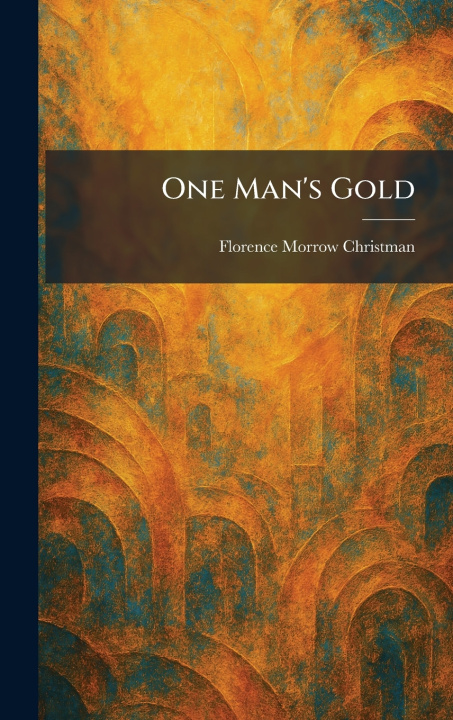
"One Man's Gold" is a compelling firsthand account of the California Gold Rush, compiled from the authentic letters and journals of Enos Christman. The work documents the arduous journey of a young apprentice printer who left Pennsylvania in 1849 to seek his fortune in the West. Christman's narrative begins with a perilous voyage around Cape Horn and continues through his experiences in the chaotic streets of early San Francisco and the rugged mining camps of Sonora.
Through vivid correspondence and meticulous diary entries, the book captures the feverish atmosphere of the era, illustrating the hardships, hopes, and daily lives of the "Forty-niners." It provides an authentic look at the lawlessness of the gold fields, the physical toll of mining, and the rapid transformation of the American frontier. As a historical document, "One Man's Gold" offers invaluable insights into the social and economic shifts triggered by the discovery of gold, serving as a quintessential record of the American pioneer spirit during one of the nation's most transformative periods.
This work has been selected by scholars as being culturally important, and is part of the knowledge base of civilization as we know it. This work was reproduced from the original artifact, and remains as true to the original work as possible. Therefore, you may see the original copyright references, library stamps (as most of these works have been housed in our most important libraries around the world), and other notations in the work.
This work is in the public domain in the United States of America, and possibly other nations. Within the United States, you may freely copy and distribute this work, as no entity (individual or corporate) has a copyright on the body of the work.
As a reproduction of a historical artifact, this work may contain missing or blurred pages, poor pictures, errant marks, etc. Scholars believe, and we concur, that this work is important enough to be preserved, reproduced, and made generally available to the public. We appreciate your support of the preservation process, and thank you for being an important part of keeping this knowledge alive and relevant.