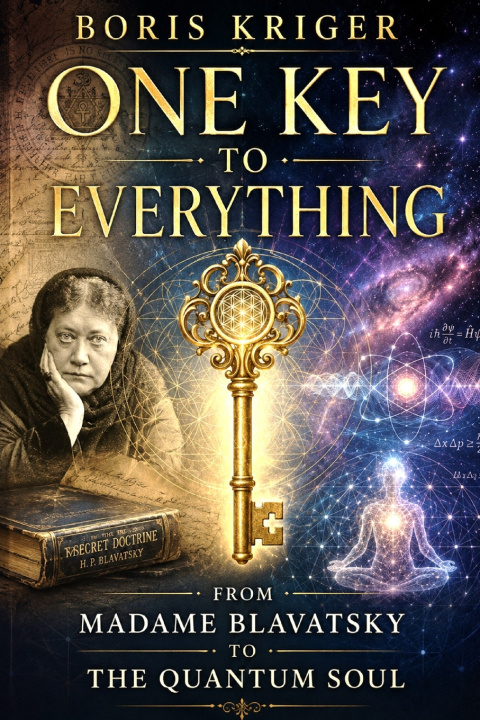
Every age believes it has finally found the one key that unlocks everything. In the nineteenth century it was Theosophy, the bold and improbable system assembled by Helena Blavatsky, who promised to braid together science, religion, and the vanished wisdom of the East into a single shining doctrine. But the dream did not die with her. It changed costume. It became Waldorf schools and Russian cosmism, symbolist poetry and the New Age marketplace, "energies and vibrations," quantum spirituality, and the transhumanist hope of uploading the soul to the cloud.
This book is the natural history of a single, unkillable temptation: the longing for the great synthesis, the conviction that the world's scattered pieces must add up to one coherent whole. With wit and skepticism, but without contempt, it follows that longing across two centuries and a dozen disguises, asking why the human mind cannot bear loose ends, why every generation rebuilds the same cathedral of meaning out of whatever materials are at hand, and what the difference might be between a living revelation and a clever imitation of one.
Neither a debunking nor a sermon, it is an invitation to think clearly about the most seductive idea we keep falling for-and to consider whether wisdom might lie not in completing the picture, but in learning to live, with dignity and even delight, among the fragments.
Keywords: Helena Blavatsky, Theosophy, esotericism, philosophy of science, spirituality, intellectual history, mysticism, meaning