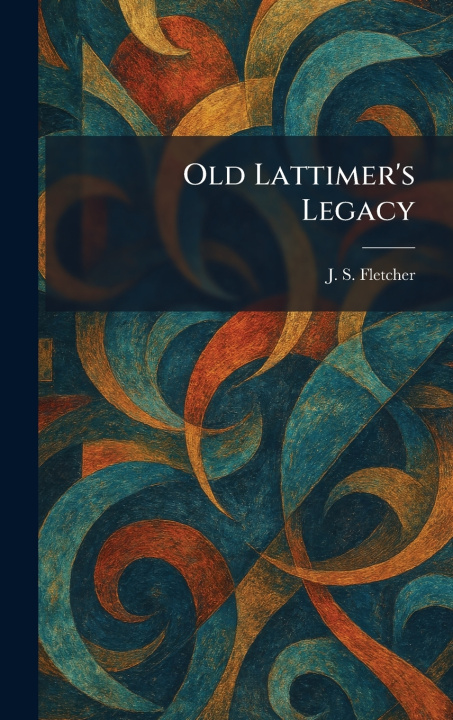
"Old Lattimer's Legacy" is a compelling mystery novel by J.S. Fletcher, a prolific and celebrated figure in the Golden Age of British crime fiction. The narrative centers on the intricate and often dangerous consequences following the death of an elderly patriarch, whose substantial inheritance triggers a series of unexpected events. As those connected to the estate scramble for their share of the wealth, long-buried secrets begin to surface, leading to a complex web of deceit and criminal intent.
With his characteristic skill for building suspense and creating atmospheric settings, Fletcher leads the reader through a meticulous investigation. The work explores themes of greed, family tensions, and the moral complexities that arise when significant wealth is at stake. Known for his logical plots and sharp characterizations, Fletcher ensures that the central puzzle remains engaging until the final revelation.
As a classic example of early 20th-century detective fiction, "Old Lattimer's Legacy" showcases the author's ability to craft a sophisticated "whodunnit" that captures the social nuances of its era. This work is an essential read for enthusiasts of traditional British mysteries and those who appreciate the foundational elements of the modern crime thriller.
This work has been selected by scholars as being culturally important, and is part of the knowledge base of civilization as we know it. This work was reproduced from the original artifact, and remains as true to the original work as possible. Therefore, you may see the original copyright references, library stamps (as most of these works have been housed in our most important libraries around the world), and other notations in the work.
This work is in the public domain in the United States of America, and possibly other nations. Within the United States, you may freely copy and distribute this work, as no entity (individual or corporate) has a copyright on the body of the work.
As a reproduction of a historical artifact, this work may contain missing or blurred pages, poor pictures, errant marks, etc. Scholars believe, and we concur, that this work is important enough to be preserved, reproduced, and made generally available to the public. We appreciate your support of the preservation process, and thank you for being an important part of keeping this knowledge alive and relevant.