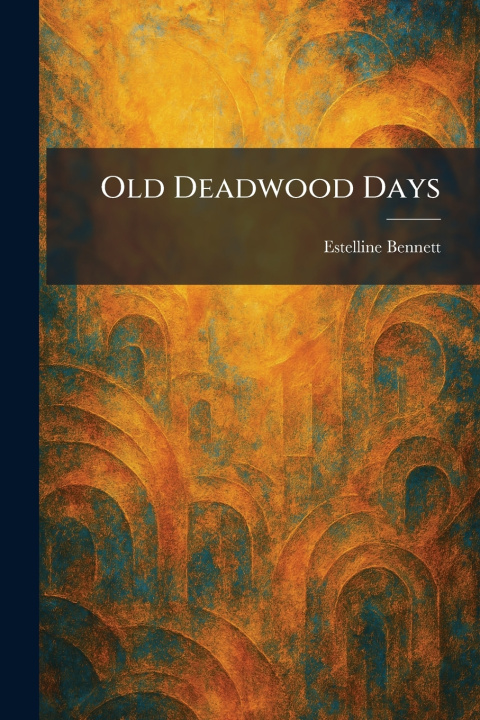
"Old Deadwood Days" is a vivid and firsthand account of life in one of the American West's most notorious boomtowns. Written by Estelline Bennett, who grew up in the shadow of the Black Hills, this work captures the unique spirit and lawless energy of Deadwood during its formative years. The narrative brings to life the legendary figures of the era, including Wild Bill Hickok and Calamity Jane, while painting a detailed picture of the everyday realities of frontier existence. From the bustling activity of the gold mines to the social dynamics of the town's residents, Bennett provides a compelling perspective on the transformation of a rugged mining camp into a settled community.
"Old Deadwood Days" serves as both a personal memoir and a historical chronicle, preserving the stories of the pioneers, gamblers, and prospectors who shaped the legacy of the Dakota Territory. Bennett's prose offers a window into a world of stagecoaches, gold fever, and the colorful characters that defined the era. This book remains an essential read for anyone interested in the authentic history of the Old West, the development of the American frontier, and the cultural heritage of South Dakota.
This work has been selected by scholars as being culturally important, and is part of the knowledge base of civilization as we know it. This work was reproduced from the original artifact, and remains as true to the original work as possible. Therefore, you may see the original copyright references, library stamps (as most of these works have been housed in our most important libraries around the world), and other notations in the work.
This work is in the public domain in the United States of America, and possibly other nations. Within the United States, you may freely copy and distribute this work, as no entity (individual or corporate) has a copyright on the body of the work.
As a reproduction of a historical artifact, this work may contain missing or blurred pages, poor pictures, errant marks, etc. Scholars believe, and we concur, that this work is important enough to be preserved, reproduced, and made generally available to the public. We appreciate your support of the preservation process, and thank you for being an important part of keeping this knowledge alive and relevant.