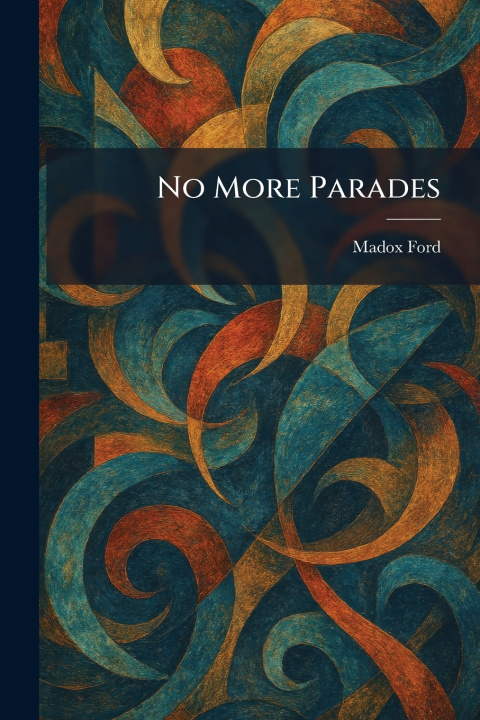
"No More Parades" is a seminal modernist novel and the powerful second installment of the "Parade's End" tetralogy. Set against the harrowing backdrop of the Western Front during World War I, the narrative follows Christopher Tietjens as he navigates the physical and psychological devastation of the Great War. Ford Madox Ford masterfully depicts the chaos of the front lines, juxtaposing the visceral reality of combat with the intricate social and emotional conflicts of Tietjens' personal life.
As the protagonist struggles to maintain his sense of honor and duty, he remains caught between his manipulative wife, Sylvia, and his deep affection for the young suffragette, Valentine Wannop. The work serves as a profound meditation on the collapse of the traditional social order and the traumatic birth of the modern era. Through its complex narrative structure and vivid prose, "No More Parades" captures the exhaustion and disillusionment of a generation forced to confront the end of an era. It remains a cornerstone of 20th-century literature, offering an unflinching look at the human cost of global conflict and the irrevocable changes it wrought upon society and the individual psyche.
This work has been selected by scholars as being culturally important, and is part of the knowledge base of civilization as we know it. This work was reproduced from the original artifact, and remains as true to the original work as possible. Therefore, you may see the original copyright references, library stamps (as most of these works have been housed in our most important libraries around the world), and other notations in the work.
This work is in the public domain in the United States of America, and possibly other nations. Within the United States, you may freely copy and distribute this work, as no entity (individual or corporate) has a copyright on the body of the work.
As a reproduction of a historical artifact, this work may contain missing or blurred pages, poor pictures, errant marks, etc. Scholars believe, and we concur, that this work is important enough to be preserved, reproduced, and made generally available to the public. We appreciate your support of the preservation process, and thank you for being an important part of keeping this knowledge alive and relevant.