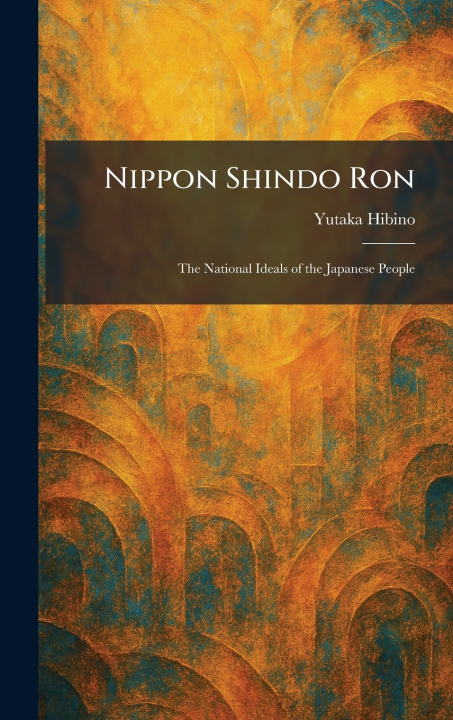
"Nippon Shindo Ron or the National Ideals of the Japanese People" offers a profound exploration of the foundational ethics and national spirit that shaped Japan during the early twentieth century. Written by Yutaka Hibino, this work serves as a comprehensive guide to the moral and social principles intended to unify the Japanese populace. It delves into the concept of the "National Way," emphasizing deep-seated loyalty to the Emperor, the importance of filial piety, and the cultivation of a unique national character often referred to as Yamato Damashii.
Through its examination of education and civic duty, the text illuminates the philosophical underpinnings of Japanese society during a period of significant transition. Hibino articulates a vision of a disciplined and harmonious nation, drawing upon historical traditions and cultural values to define the responsibilities and spiritual orientation of the Japanese people. This book provides invaluable insight for readers interested in history, philosophy, and sociology, offering a window into the ideological framework that fostered Japan's social cohesion and modernization. It remains a significant historical document for understanding the intersection of state ideology, traditional ethics, and national identity in East Asian history.
This work has been selected by scholars as being culturally important, and is part of the knowledge base of civilization as we know it. This work was reproduced from the original artifact, and remains as true to the original work as possible. Therefore, you may see the original copyright references, library stamps (as most of these works have been housed in our most important libraries around the world), and other notations in the work.
This work is in the public domain in the United States of America, and possibly other nations. Within the United States, you may freely copy and distribute this work, as no entity (individual or corporate) has a copyright on the body of the work.
As a reproduction of a historical artifact, this work may contain missing or blurred pages, poor pictures, errant marks, etc. Scholars believe, and we concur, that this work is important enough to be preserved, reproduced, and made generally available to the public. We appreciate your support of the preservation process, and thank you for being an important part of keeping this knowledge alive and relevant.