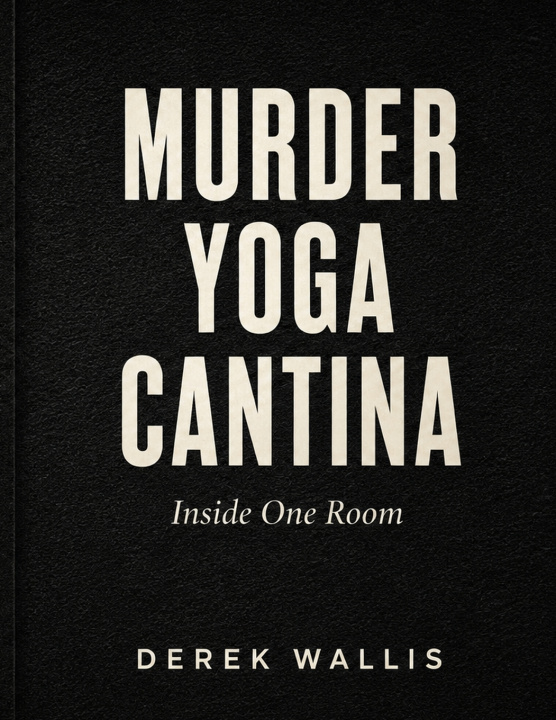
Brazilian jiu-jitsu has a problem with its name. Jiu-jitsu sounds like a movie villain's discipline, while Brazilian conjures beach culture, something loose and warm. Put them together and you get something that sounds either dangerous or exotic, when the reality is neither. It is, depending on who you ask, closer to chess. Or therapy. Or church.
Most of the people in this book train at a gym on the Upper West Side of New York, affiliated with the Renzo Gracie lineage. I started training here because my son needed something I couldn't give him. What I found instead was a room full of people being stripped down to something simpler: learning who they were.
The chapters that follow are built from conversations with students and instructors ranging from white belts to black belts, newcomers to retirees, lawyers to construction workers. They have been edited for clarity and flow, but the voices are theirs. I have tried not to impose a thesis on them.
The thesis emerged anyway.
It repeated across people who had never met, in different words but with the same pattern: jiu-jitsu doesn't give you what you came for. It gives you what you need.
People came for fitness, self-defense, stress relief, competition. What they found was harder to name: a confrontation with their own ego. A way to be present. The ability to lose without collapsing. A community that knew how to hold each other to account.
None of this is mystical. The mat is canvas and foam. Techniques are leverage and timing. But there is a kind of compression that happens in that room. Things that don't matter fall away. What remains is harder, simpler, and impossible to ignore.
This is my attempt to write down what remains.