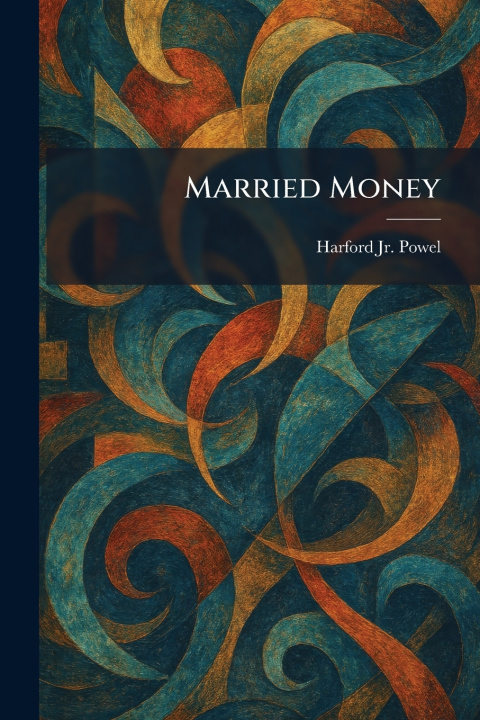
"Married Money" is a witty social satire that explores the humorous and often complicated intersection of romance and high-stakes finance during the late 1920s. Set against the contrasting backdrops of staid, traditional Boston society and the flashy, fast-paced world of New York's Park Avenue, the story follows the escapades of a couple navigating the pressures of inherited wealth and social expectations. Harford Powel, Jr. expertly captures the spirit of the Jazz Age, lampooning the eccentricities of the upper class with a sharp eye for detail and a lighthearted touch.
The narrative delves into the challenges of maintaining status while pursuing personal happiness, offering a clever look at how wealth influences character and relationships. As a comedy of manners, "Married Money" reflects the cultural anxieties and triumphs of an era defined by economic prosperity and shifting social boundaries. Readers interested in historical fiction, social satire, and the glamorous complexities of early 20th-century American life will find this work both entertaining and insightful. It remains a sparkling example of the sophisticated urban fiction popular during the interwar period.
This work has been selected by scholars as being culturally important, and is part of the knowledge base of civilization as we know it. This work was reproduced from the original artifact, and remains as true to the original work as possible. Therefore, you may see the original copyright references, library stamps (as most of these works have been housed in our most important libraries around the world), and other notations in the work.
This work is in the public domain in the United States of America, and possibly other nations. Within the United States, you may freely copy and distribute this work, as no entity (individual or corporate) has a copyright on the body of the work.
As a reproduction of a historical artifact, this work may contain missing or blurred pages, poor pictures, errant marks, etc. Scholars believe, and we concur, that this work is important enough to be preserved, reproduced, and made generally available to the public. We appreciate your support of the preservation process, and thank you for being an important part of keeping this knowledge alive and relevant.