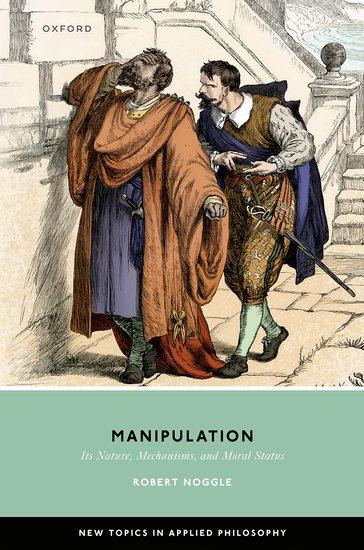
Gaslighting, flattery, misdirection, nagging, emotional blackmail, charm offensives, playing on emotions. These are all examples of ordinary manipulation. Such manipulation is common in everyday life, which is unfortunate, since manipulation seems like a bad thing. Manipulation: Its Nature, Mechanisms, and Moral Status answers three questions about manipulation: what is it, how does it work, and why is it bad? Addressing the first question requires us to find something that all forms of manipulation have in common, but which is not shared by other forms of influence. Robert Noggle argues that the common feature of all forms of ordinary manipulation is that they are mistake-inducing. This idea is the basis for the Mistake Account of manipulation, which defines manipulation as a kind of influence that operates by introducing a mistake into the mental states or processes of the person being influenced. To explain how manipulation works, this book explores the psychological levers that manipulators use to get us to make the mistakes that will get us to do what they want. These include various cognitive and decision-making biases, our tendency to choose the lesser good over the greater good when the lesser good is immediately available, and the simple fact that human reason is an imperfect thing. To explain why manipulation seems like a bad thing, Noggle first argues that, while manipulation is always presumptively immoral, it can be justified in extreme situations. He then shows that manipulation''s presumptive immorality derives from the fact that it involves getting someone to make a mistake, and making a mistake is a bad thing. However, the most morally egregious instances of manipulation also have bad effects on well-being and autonomy. This book concludes by applying the Mistake Account to various influences, including priming, conditioning, nudges, advertising, sales, and online influences.