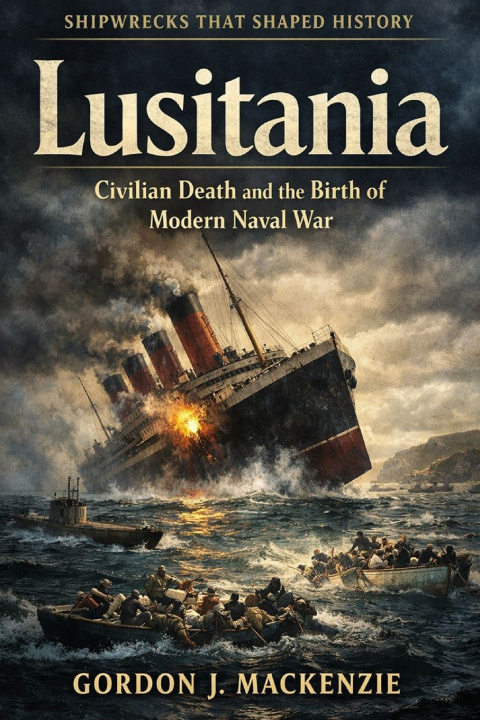
On 7 May 1915, the RMS Lusitania was struck by a German torpedo off the coast of Ireland. In minutes, a modern liner built to embody speed, comfort, and confidence rolled into chaos. Lifeboats jammed and swung uselessly. The decks tilted beyond control. The sea filled with voices, then with silence.
But the sinking was never just a maritime disaster. It became a turning point in how the world understood war at sea.
Lusitania: Civilian Death and the Birth of Modern Naval War follows the ship's final voyage and the brutal mechanics of her loss, then tracks the shockwave that travelled far beyond the Irish coast. This is the story of how submarine warfare shattered old assumptions about warning, rescue, and civilian protection; how governments and newspapers fought to control the narrative; and how the sinking's unresolved controversies (cargo, contraband, and the reported second explosion) became part of the political battle over legitimacy.
Written in clear, fast-moving historical narrative, this book places the tragedy in its full context: blockade and escalation, neutrality and diplomacy, and the grim logic that turns civilians into strategic variables. It is not a sensational retelling. It is an honest account of a shipwreck that changed the moral weather of the twentieth century.
If you think you know the Lusitania story, this book will show you why it still matters: not only for what happened in the water, but for what the world learned (and what it failed to learn) once the wreck slipped beneath the surface.