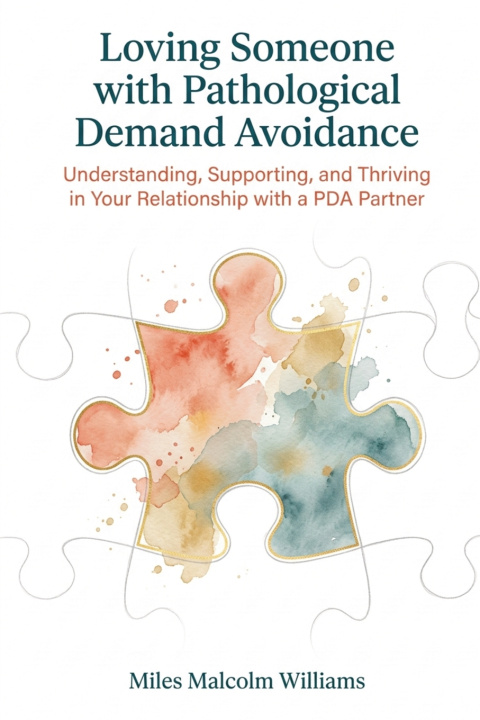
Your partner is smart, capable, and loving. So why does every simple request turn into a shutdown?
You have softened your tone. You have written lists. You have stopped asking altogether and done everything yourself, only to end up exhausted, resentful, and wondering if you are the problem. You have searched for answers in relationship books, autism resources, and late-night internet spirals, and nothing quite fits. Until now.
The first relationship guide written specifically for partners and spouses of adults with PDA.
Pathological Demand Avoidance is a profile within the autism spectrum where the nervous system treats everyday requests, expectations, and obligations as threats to personal autonomy. It is not laziness. It is not manipulation. It is not a lack of love. But without the right understanding, it can quietly destroy a partnership from the inside out.
What you will learn inside this book:
How PDA differs from general autism, ADHD, and oppositional defiance, and why that distinction changes everything. Why your partner can handle a full workday but falls apart when you ask about the dishes. The "demand budget" concept that explains the maddening inconsistency between what they can do and what they will do. Communication strategies that actually work, including declarative language, collaborative framing, and the right time to say nothing at all. How to rebuild intimacy when physical closeness itself has become a demand. Why traditional couples therapy often makes PDA relationships worse, and what to look for instead. Practical systems for household management, finances, parenting, and social life that honor both partners. What PDA burnout looks like and how to survive it without losing yourself.
This book is written for both partners.
Every chapter includes composite case studies, practical scripts, dual-perspective sidebars (one for the PDA partner, one for the non-PDA partner), low-demand reflection prompts, and exercises designed with the PDA nervous system in mind. The tone is warm, honest, and neurodiversity-affirming throughout. No guilt trips. No impossible standards. Just real strategies for real couples.
What makes this book different:
This is not another general autism relationship guide. It addresses the specific dynamics that PDA creates in romantic partnerships: demand sensitivity around intimacy, the conflict cycle of avoidance and reset, the caregiver trap, the accommodation spiral, and the grief of watching the relationship you expected collide with the relationship you have. It also does something most PDA resources fail to do: it centers the non-PDA partner's needs alongside the PDA partner's neurology, because a relationship that only accommodates one person is not a relationship that can last.