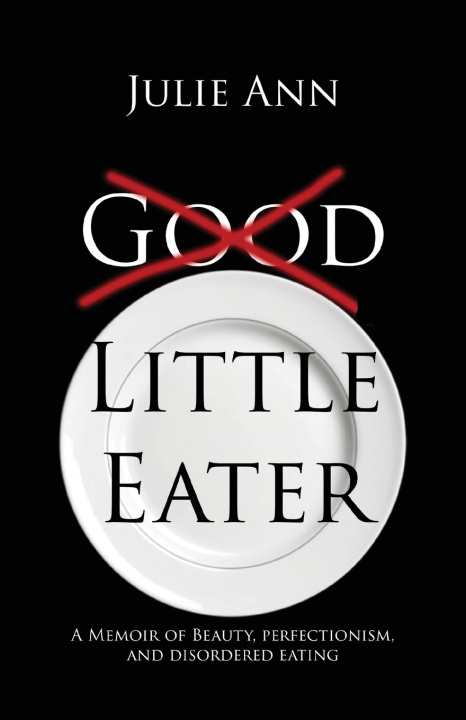
Being called a Good Little Eater doesn't protect you from disordered eating. At 42 years old, Julie was diagnosed with disordered eating, yet as a child was called a Good Little Eater. Julie traces her early food issues that began benignly enough, like not wanting cold and hot food touching on her plate, to her puberty weight gain and her desire for control in a world where she felt invisible. After graduating high school on the perils of anorexia, Julie struggles with food through marriage, motherhood, and menopause.
Be agreeable. Follow directions. Don't be a bother. Such mandates dictated Julie's world, stifling her ability to manage conflict and disappointment. Little Eater takes readers through the complexities of eating disorders and our complicated relationship with food, issues that seep into all aspects of life and cannot be simplified into weight or size or appearance. Julie explores our definition of beauty, our desire for perfection, and our need to maintain control in a society that reveres youth, attractiveness, and emaciation. Food becomes a coping mechanism, a controllable element when life doesn't give us happy endings.