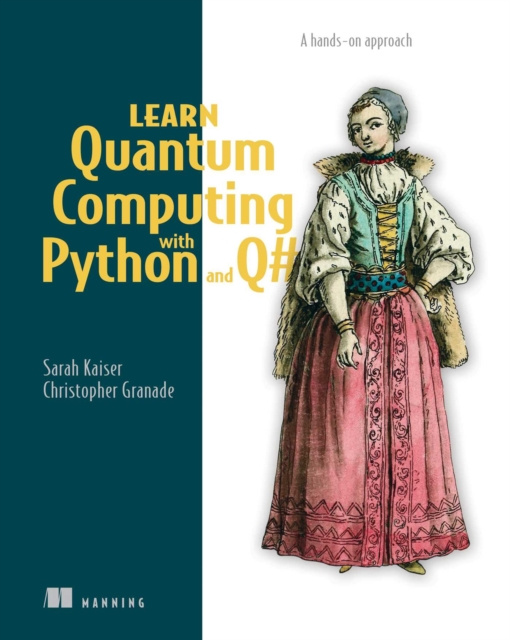
Learn Quantum Computing with Python and Q# demystifies quantum computing. Using Python and the new quantum programming language Q#, you’ll learn QC fundamentals as you apply quantum programming techniques to real-world examples including cryptography and chemical analysis.
Learn Quantum Computing with Python and Q# builds your understanding of quantum computers, using Microsoft’s Quantum Development Kit to abstract away the mathematical complexities. You’ll learn QC basics as you create your own quantum simulator in Python, then move on to using the QDK and the new Q# language for writing and running algorithms very different to those found in classical computing.
Key Features
· The underlying mechanics of how quantum computers work
· How to simulate qubits in Python
· Q# and the Microsoft Quantum Developer Kit
· How to apply quantum algorithms to real-world examples
For readers with basic programming skills and some experience of linear algebra, calculus and complex numbers.
About the technology
Quantum computing is the next step in computing power and scalability, with the potential to impact everything from data science to information security. Using qubits, the fundamental unit of quantum information, quantum computers can solve problems beyond the scale of classical computing. Software packages like Microsoft''s Quantum Development Kit and the Q# language are now emerging to give programmers a quick path to exploring quantum development for the first time.
Christopher Granade completed his PhD in physics (quantum information) at the University of Waterloo’s Institute for Quantum Computing, and now works in the Quantum Architectures and Computation (QuArC) group at Microsoft. He works in developing the standard libraries for Q# and is an expert in the statistical characterization of quantum devices from classical data. Previously, Christopher helped Scott Aaronson prepare lectures into his recent book, Quantum Computing Since Democritus.
Sarah Kaiser completed her PhD in physics (quantum information) at the University of Waterloo’s Institute for Quantum Computing. She has spent much of her career developing new quantum hardware in the lab, from satellites to hacking quantum cryptography hardware. Communicating what is so exciting about quantum is her passion, and she loves finding new demos and tools to help enable the quantum community to grow. When not at the keyboard, she loves kayaking and writing books about engineering for kids.