Carte Intelligence and the State Jonathan House

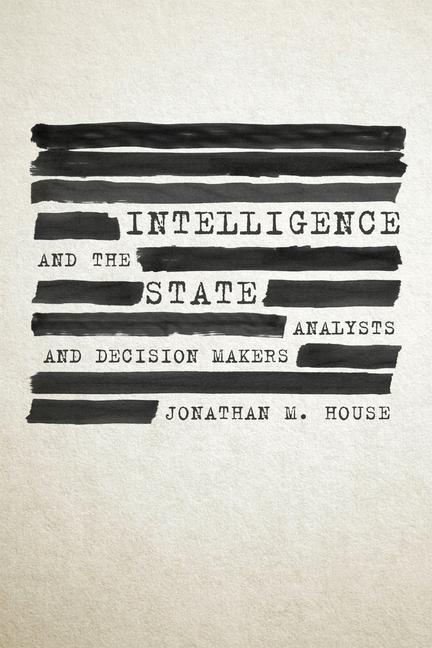
Intelligence and the State

Analysts and Decision Makers

Limbă: engleză
Legare: Copertă tare
Disponibilitate: În depozitul extern
Expediem în 20-33 zile
298.53 lei
In the eighty years since Pearl Harbor, the United States has developed a professional intelligence...


Informații despre carte

Limbă
engleză
Legare
Carte - Copertă tare
Publicat
2022
Pagini
248
EAN
9781682477724
ISBN
168247772X
Enbook ID
37105848
Greutate
462
Dimensiuni
236 x 160 x 24

Descriere completă

In the eighty years since Pearl Harbor, the United States has developed a professional intelligence community that is far more effective than most people acknowledge--in part because only intelligence failures see the light of day, while successful collection and analysis remain secret for decades. Intelligence and the State explores the relationship between the community tasked to research and assess intelligence and the national decision makers it serves. The book argues that in order to accept intelligence as a profession, it must be viewed as a non-partisan resource to assist key players in understanding foreign societies and leaders. Those who review these classified findings are sometimes so invested in their preferred policy outcomes that they refuse to accept information that conflicts with preconceived notions. Rather than demanding that intelligence evaluations conform to administration policies, a wise executive should welcome a source of information that has not "drunk the Kool-Aid" by supporting a specific policy decision. Jonathan M. House offers a brief overview of the nature of national intelligence, and especially of the potential for misperception and misunderstanding on the part of executives and analysts. Furthermore, House examines the rise of intelligence organizations first in Europe and then in the United States. In those regions fear of domestic subversion and radicalism drove the need for foreign surveillance. This perception of a domestic threat tempted policy makers and intelligence officers alike to engage in covert action and other policy-based, partisan activities that colored their understanding of their adversaries. Such biases go far to explain the inability of Nazi Germany and the Soviet Union to predict and deal effectively with their opponents. The development of American agencies and their efforts differed to some degree from these European precedents but experienced some of the same problems as the Europeans, especially during the early decades of the Cold War. By now, however, the intelligence community has become a stable and effective part of the national security structure. House concludes with a historical examination of familiar instances in which intelligence allegedly failed to warn national leaders of looming attacks, ranging from the 1941 German invasion of the USSR to the Arab surprise attack on Israel in 1973.

S-ar putea să te intereseze

Herb "Tootle" Estes

Gary L. Parker
84.73 lei

London Fog

Christine L. Corton
145.64 lei
101.71 lei

Mobility in Smart Cities

Rashmi Ms. Kapoor
118.10 lei
102.72 lei
59.70 lei

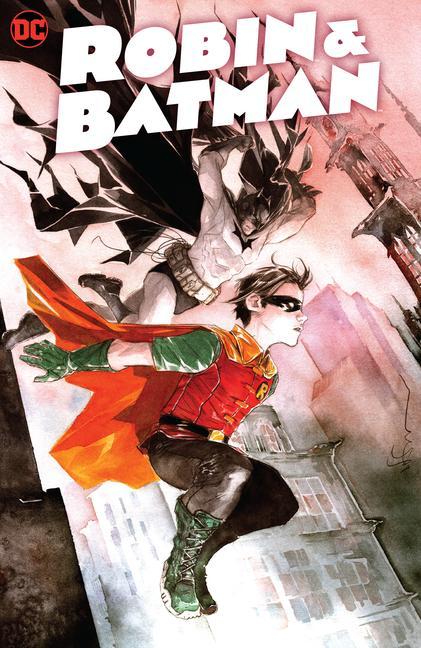
Robin & Batman

Dustin Nguyen
100.51 lei
604.09 lei
58.99 lei

Wilfred Cantwell Smith

Edward J. Hughes
144.23 lei
81.81 lei

Vanishing Women

Karen Beckman
666.92 lei
97.79 lei

Tobacconist

Robert Seethaler
54.67 lei

Clienții care au cumpărat această carte au mai cumpărat și

85.43 lei