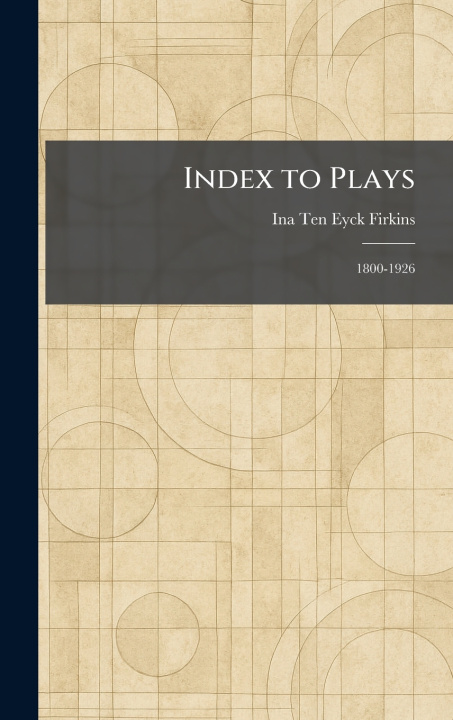
"Index to Plays 1800-1926" is a definitive reference resource for the study of dramatic literature. Compiled by the esteemed bibliographer Ina Ten Eyck Firkins, this volume provides a systematic guide to thousands of plays published during the nineteenth and early twentieth centuries. It serves as an essential tool for librarians, theater historians, and literary researchers, offering a comprehensive index that spans a period of immense creative transformation in the performing arts.
The work catalogs plays by author and title, including works found in individual volumes, anthologies, and periodicals. By bridging the gap between the Romantic era and the dawn of modern drama, "Index to Plays 1800-1926" offers a clear map of the theatrical landscape of its time. This index remains an invaluable asset for anyone seeking to trace the development of playwrighting or locate hard-to-find scripts from a century of rich dramatic production. Whether exploring the works of well-known dramatists or discovering forgotten gems of the stage, this reference work provides the necessary structure to navigate the vast world of dramatic publications.
This work has been selected by scholars as being culturally important, and is part of the knowledge base of civilization as we know it. This work was reproduced from the original artifact, and remains as true to the original work as possible. Therefore, you may see the original copyright references, library stamps (as most of these works have been housed in our most important libraries around the world), and other notations in the work.
This work is in the public domain in the United States of America, and possibly other nations. Within the United States, you may freely copy and distribute this work, as no entity (individual or corporate) has a copyright on the body of the work.
As a reproduction of a historical artifact, this work may contain missing or blurred pages, poor pictures, errant marks, etc. Scholars believe, and we concur, that this work is important enough to be preserved, reproduced, and made generally available to the public. We appreciate your support of the preservation process, and thank you for being an important part of keeping this knowledge alive and relevant.