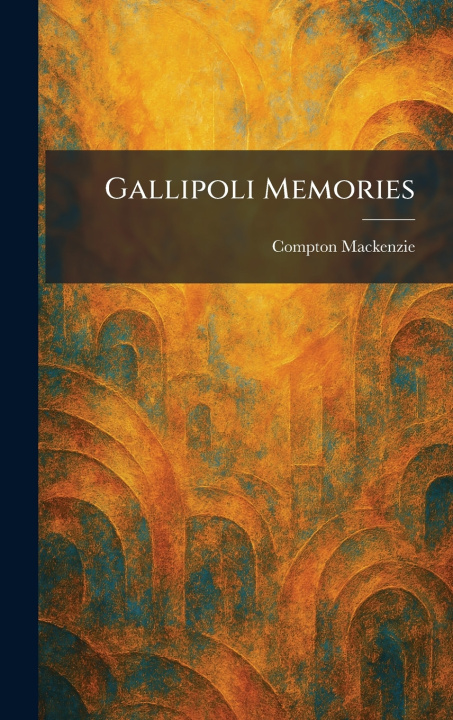
"Gallipoli Memories" is a poignant and vivid firsthand account of the Dardanelles Campaign during World War I, penned by the acclaimed novelist and intelligence officer Compton Mackenzie. Serving in the Royal Marines and later within the intelligence department, Mackenzie offers a unique perspective on one of the most controversial and tragic military operations of the Great War.
The work transcends standard military reporting, blending keen observation with a novelist's eye for character and atmosphere. Mackenzie captures the chaotic nature of the Mediterranean Expeditionary Force, the sweltering heat and disease of the peninsula, and the complex personalities of the high command. His narrative provides an intimate look at the logistical challenges, the camaraderie among the troops, and the shifting tides of the campaign's progress. More than just a record of strategy, the book reflects on the human cost of the conflict and the profound impact of the Aegean landscape on the soldiers stationed there.
Rich in detail and written with an elegant literary style, "Gallipoli Memories" remains an essential work for understanding the realities of life behind the front lines and the intricate workings of wartime intelligence. It stands as a significant contribution to Great War literature, preserving the sensory experiences and psychological weight of the Gallipoli experience for future generations.
This work has been selected by scholars as being culturally important, and is part of the knowledge base of civilization as we know it. This work was reproduced from the original artifact, and remains as true to the original work as possible. Therefore, you may see the original copyright references, library stamps (as most of these works have been housed in our most important libraries around the world), and other notations in the work.
This work is in the public domain in the United States of America, and possibly other nations. Within the United States, you may freely copy and distribute this work, as no entity (individual or corporate) has a copyright on the body of the work.
As a reproduction of a historical artifact, this work may contain missing or blurred pages, poor pictures, errant marks, etc. Scholars believe, and we concur, that this work is important enough to be preserved, reproduced, and made generally available to the public. We appreciate your support of the preservation process, and thank you for being an important part of keeping this knowledge alive and relevant.