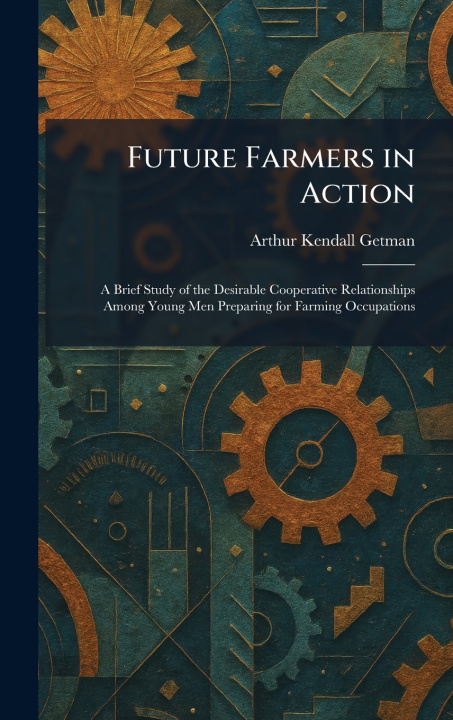
"Future Farmers in Action" is a foundational study focused on the development of cooperative relationships and leadership skills among young men entering the agricultural profession. Written during a transformative era for American rural life, this work examines the social and economic benefits of collaboration in farming, emphasizing how collective action and mutual support can enhance individual success and community stability. Arthur Kendall Getman explores the practical application of cooperative principles in vocational training, providing a roadmap for young farmers to navigate the complexities of modern agriculture.
The book delves into the importance of character building, organizational participation, and the specific dynamics of agricultural clubs and student organizations. By focusing on the human element of farming, Getman highlights the necessity of teamwork and shared goals in an industry often characterized by isolation. "Future Farmers in Action" serves as both a historical record of agricultural education theory and a timeless exploration of the virtues of rural cooperation. It remains a significant resource for those interested in the history of vocational education, the evolution of the Future Farmers of America movement, and the enduring value of community-driven agricultural practices.
This work has been selected by scholars as being culturally important, and is part of the knowledge base of civilization as we know it. This work was reproduced from the original artifact, and remains as true to the original work as possible. Therefore, you may see the original copyright references, library stamps (as most of these works have been housed in our most important libraries around the world), and other notations in the work.
This work is in the public domain in the United States of America, and possibly other nations. Within the United States, you may freely copy and distribute this work, as no entity (individual or corporate) has a copyright on the body of the work.
As a reproduction of a historical artifact, this work may contain missing or blurred pages, poor pictures, errant marks, etc. Scholars believe, and we concur, that this work is important enough to be preserved, reproduced, and made generally available to the public. We appreciate your support of the preservation process, and thank you for being an important part of keeping this knowledge alive and relevant.