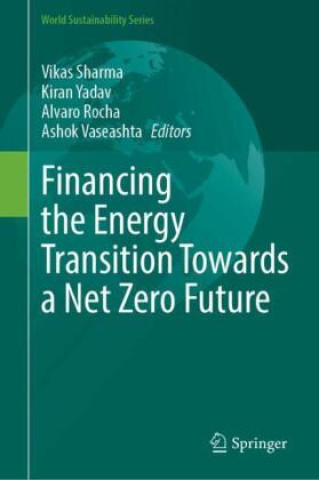
This book offers a comprehensive and timely exploration of financial strategies, instruments, and policies essential for driving the global energy transition toward a net zero future. It provides actionable insights into how innovative financing can accelerate decarbonization, support green technologies, and ensure a just and inclusive energy shift.
Amid the escalating climate crisis and urgent sustainability targets under the Paris Agreement and the UN SDGs, the world is witnessing an unprecedented need for mobilizing capital to transform energy systems. This book brings together global perspectives, empirical evidence, and case studies to address one of the most pressing questions of our time: How can we finance a rapid, equitable, and resilient transition to clean energy?
This book delves into a wide spectrum of topics, including green bonds, carbon markets, blended finance, hydrogen financing, renewable energy investment, energy access in the Global South, FinTech innovations, ESG compliance, and just transition principles. It highlights the role of institutional investors, development finance institutions, and public private partnerships in closing the investment gap for clean energy infrastructure.
It also addresses region-specific challenges and solutions with comparative insights from Asia, Africa, Latin America, and Europe. Sectoral chapters on hydrogen, mobility, grid storage, and digitalization provide focused analysis of capital flows and emerging investment trends. This book critically examines enabling policies, fiscal tools, risk mitigation strategies, and governance mechanisms that shape sustainable finance practices in energy systems.
Designed for scholars, policymakers, practitioners, development agencies, and finance professionals, this book offers a valuable reference to support strategic planning, climate finance policymaking, and investment decision-making in the pursuit of global sustainability and energy equity. It is especially relevant for researchers and graduate students in sustainability studies, green finance, energy economics, public policy, and international development.