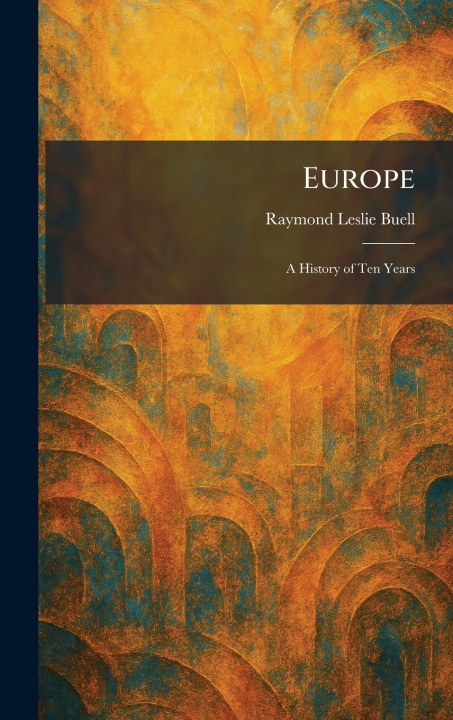
"Europe: A History of Ten Years" is a comprehensive and insightful examination of the transformative decade following the end of the First World War. Written by the esteemed political scientist Raymond Leslie Buell, this work provides a detailed survey of the political, social, and economic reconstruction of Europe between 1918 and 1928. Buell meticulously traces the impact of the Treaty of Versailles and the subsequent efforts to establish a lasting peace through the League of Nations and various international agreements.
The narrative explores the internal challenges faced by major powers and newly formed nations alike, highlighting the struggles for democratic stability and the rising tensions that characterized the interwar period. Through a clear and scholarly lens, the author analyzes the complexities of reparations, minority rights, and the shifting diplomatic alliances that defined the era. "Europe: A History of Ten Years" serves as a crucial historical record, offering readers a contemporary perspective on the rebuilding of a continent in the shadow of total war. It remains a valuable resource for students of international relations and anyone interested in the foundational events of the early twentieth century.
This work has been selected by scholars as being culturally important, and is part of the knowledge base of civilization as we know it. This work was reproduced from the original artifact, and remains as true to the original work as possible. Therefore, you may see the original copyright references, library stamps (as most of these works have been housed in our most important libraries around the world), and other notations in the work.
This work is in the public domain in the United States of America, and possibly other nations. Within the United States, you may freely copy and distribute this work, as no entity (individual or corporate) has a copyright on the body of the work.
As a reproduction of a historical artifact, this work may contain missing or blurred pages, poor pictures, errant marks, etc. Scholars believe, and we concur, that this work is important enough to be preserved, reproduced, and made generally available to the public. We appreciate your support of the preservation process, and thank you for being an important part of keeping this knowledge alive and relevant.