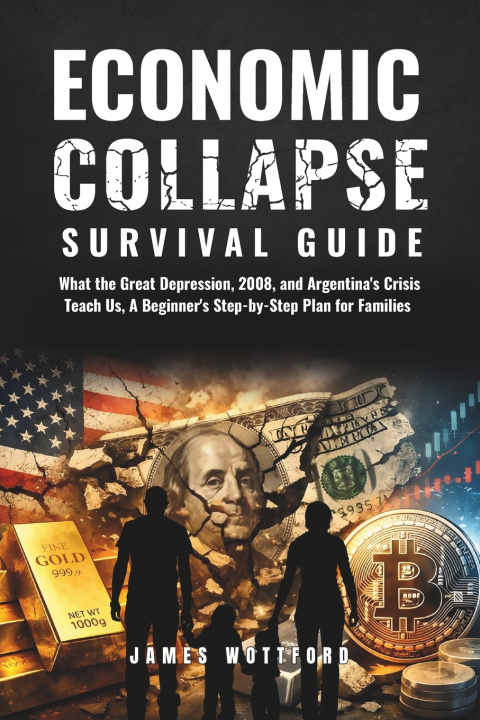
A Step-by-Step Survival Plan for Families Facing Economic Collapse
Economic collapse is not an abstract fear. It has happened within living memory, in countries that looked stable right up until they weren't. The Great Depression left one in four Americans without work and shuttered thousands of banks. The 2008 financial crisis erased trillions in wealth, collapsed major institutions, and threw millions of families into financial freefall. Argentina's economic collapse froze bank accounts, triggered hyperinflation, and forced ordinary households to improvise entire new systems for daily survival.
In each case, the families who came through it with the least damage had something in common. They had prepared. Not in extreme ways, but in practical, real-world ways that gave them options when the systems they depended on stopped working.
This guide is built for families who want those options. It does not require you to become a survivalist, move off-grid, or make dramatic changes to your lifestyle. It is a step-by-step plan that works within the life you already have.
Inside this guide you will discover:
The key triggers and patterns behind the Great Depression, the 2008 financial crisis, and Argentina's collapse, and the early warning signs that every family can learn to recognize
- A home audit framework for identifying exactly where your household is most exposed: income dependence, food supply, payment systems, housing, and transportation
- A step-by-step process for building a financial resilience plan, including emergency savings targets, debt management strategies, and income diversification approaches
- Banking and cash strategies that protect you when electronic payment systems go down or banks freeze withdrawals
- Practical methods for managing inflation and price spikes, including bulk buying, flexible meal planning, and community purchasing alternatives
- A three-tier food security system for building household supplies without panic buying or waste
- A skills-and-income audit that maps your household's existing abilities to recession-resilient work, freelance options, and barter opportunities
- Community-building frameworks for creating the mutual aid networks that history shows are the real survival infrastructure in a serious economic downturn
Each chapter is built around practical tools: checklists, worksheets, comparison tables, and step-by-step frameworks you can use the same day you read them. The material draws directly on what worked and what failed across three major historical crises, so the guidance is grounded in real evidence rather than speculation.
This guide is written for people with no prior background in economics, financial planning, or emergency preparedness. Every concept is explained in plain language. Every tool is designed to be used by ordinary families with real constraints on their time and money.
Economic downturns are not a matter of if. History makes clear they are a matter of when. This guide gives your family a concrete plan to be ready.
Start reading today and take the first step toward real economic resilience for your family.