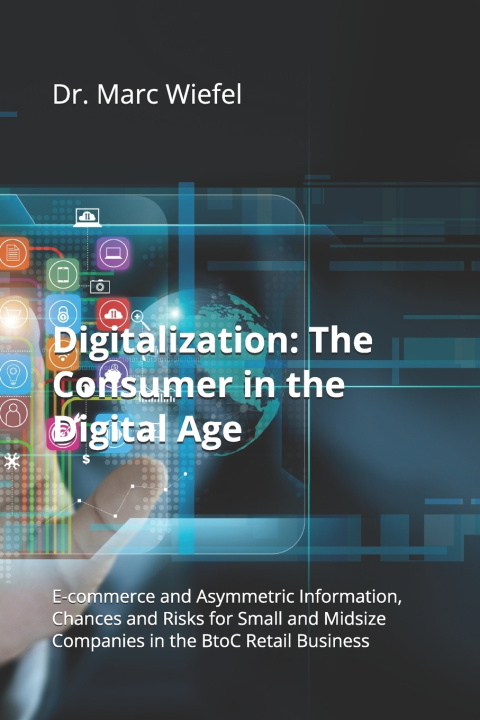
Carte Digitalization Marc Stephan Wiefel

Digitalization

The Consumer in the Digital Age : E-commerce and Asymmetric Information, Chances and Risks for Small and Midsize Companies in the BtoC Retail Business

Limbă: engleză
Legare: Carte broșată
Disponibilitate: În depozitul extern
Expediem în 10-18 zile
103.27 lei
This book explores the impact of the global megatrend of digitalization on the business model of sma...

Informații despre carte

Limbă
engleză
Legare
Carte - Carte broșată
Publicat
2024
Pagini
308
EAN
9798322035824
Enbook ID
52822147
Greutate
376
Dimensiuni
152 x 229 x 20

Descriere completă

This book explores the impact of the global megatrend of digitalization on the business model of small and midsize companies, especially on retail. Fundamentally, the revolutionized search and purchasing behavior of consumers is in the center of the analysis. Businesses around the world need to adapt to the digital consumer, otherwise they will simply be consolidated. The core question this work tries to answer, is the further development of online purchase behavior, precisely the hypothesis, that only online purchase will stagnate or even slow down for certain product categories. In order to have a better understanding of the current situation among small and midsize companies on the knowledge about digitalization, an online survey with more than 100 participating leaders from retail companies has been executed. The main part for discussing the hypothesis is based on the model of asymmetric information between buyers and seller, the Principal Agent Theory by Georg Akerlof. Information asymmetry is the key to understand different aspects that impact on e-commerce. Key leavers (selected) to influence information search and purchase are big data, social isolation, cyber crime and aggressive marketing. One of the conclusions is, that The Principal Agent Theory, developed quite a long time before digitalization began, is still valid and there are different pros and cons in "the old" and the digital world, in regard to asymmetric information. Truly digitalization is unstoppable, but for certain products and industries, online purchase behavior will stagnate or decrease. The model of asymmetric information permits clear recommendations and guidance for small and midsize companies to evaluate urgency to adapt digital consumer purchase behavior.