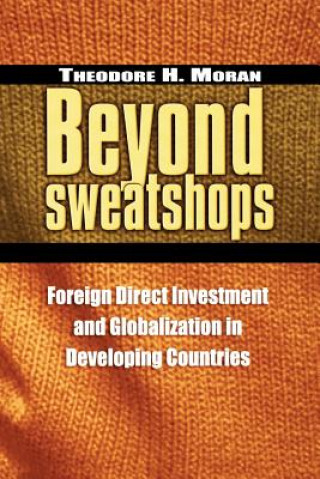
Images of sweatshop labor in developing countries have rallied opponents of globalization against foreign direct investment (FDI). The controversy is most acute over the treatment of low-skilled workers producing garments, footwear, toys, and sports equipment in foreign-owned plants or the plants of subcontractors. Activists cite low wages, poor working conditions, and a variety of economic, physical, and sexual abuses among the negative consequences of the globalization of industry. In Beyond Sweatshops, Theodore Moran examines the impact of FDI in manufacturing on growth and welfare in developing countries, and explores how host governments can take advantage of the contributions of foreign investment while avoiding the hazards to lower-skilled workers. He traces case studies of countries that have managed to produce steady improvement in worker treatment at plants exporting garments, footwear, and other labor-intensive products.
The first part of the book examines multilateral proposals designed to place a floor under the treatment of workers around the world, contrasting a WTO-based system to enforce labor standards with "voluntary" arrangements, including corporate codes of conduct, certification organizations, and "sweatshop free" labeling. It explores the pros and cons of adding a "living wage" requirement to the ILO's core labor standards. The second part of the book presents data that significantly broadens our understanding of FDI. By analyzing the evidence from a variety of developing countries --in Asia, Latin America, and Africa --Moran demonstrates that most FDI goes to industrial sectors that employ trained workers who are not easily exploited. The flow of FDI to plants that produce electronics, auto parts, industrial equipment, chemicals, pharmaceuticals, and medical equipment, paying production workers two to five times more than what is found in lower-skilled operations, is twenty-five times the flow to garment, textile, and footwear plants. Appropriately designed host country policies can transform the development trajectory of the entire economy.
Moran advocates various "build-up" --rather than "trickle down" --strategies to enable developing countries to capture the benefits of FDI. He concludes by examining the impact of outward investment on workers and communities in the home economy, investigating evidence about what Ross Perot called the "great sucking sound," and asking whether the expansion of foreign investment in the developing world comes at the expense of good jobs and dynamic industries in the developed countries.