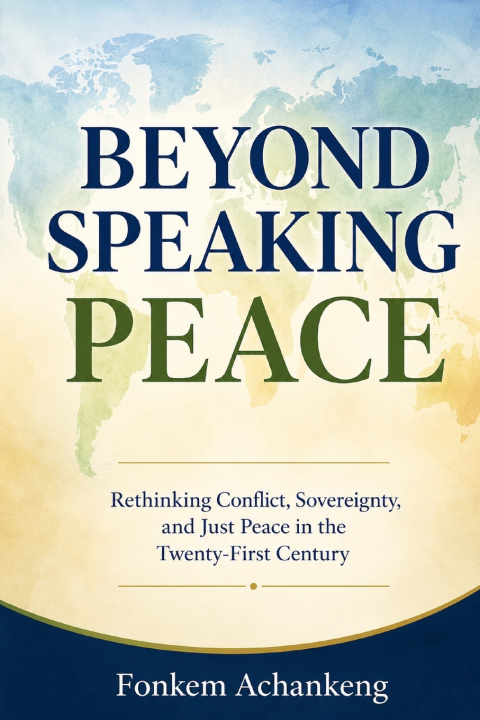
Beyond Speaking Peace: Rethinking Conflict, Sovereignty, and Just Peace in the Twenty-First Century, edited by Fonkem Achankeng, is a groundbreaking interdisciplinary volume that challenges conventional approaches to peacebuilding in a world increasingly marked by persistent conflict, political violence, injustice, and human suffering. Rather than focusing solely on peace rhetoric, diplomatic declarations, or international conferences, the book asks a more urgent question: How do we move beyond speaking about peace to actually creating it?
Bringing together scholars, practitioners, theologians, peace advocates, and policy thinkers from diverse backgrounds, the volume critically examines the gap between the language of peace and the realities of war. The contributors explore themes such as sovereignty, justice, leadership, international institutions, race, conflict prevention, peace education, morality, spirituality, and human dignity. They argue that genuine peace cannot be achieved through speeches and symbolic gestures alone but requires courageous action, accountability, structural justice, and a commitment to the flourishing of all peoples.
The book is organized into six thematic sections covering the philosophical foundations of peace, the role of leadership and global institutions, African experiences of conflict and reconciliation, educational and moral approaches to peacebuilding, spiritual and religious dimensions of peace, and constructive frameworks for achieving what the contributors describe as "just peace." Special attention is given to overlooked conflicts, marginalized communities, and the limitations of state-centered approaches to peace and security.
At its core, Beyond Speaking Peace advances a compelling argument: peace is not merely the absence of war but the presence of justice, dignity, accountability, inclusion, and human flourishing. The volume challenges readers, policymakers, faith leaders, educators, and citizens alike to rethink prevailing assumptions about conflict resolution and to embrace practical pathways toward sustainable peace in the twenty-first century. It is both a scholarly contribution and a moral call to action for a world seeking alternatives to cycles of violence and division.