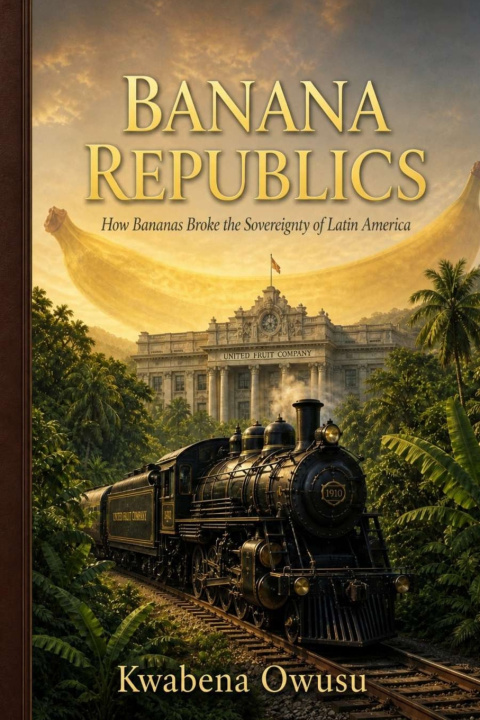
In the mid-19th century, an exotic, sweet, and easy-to-peel tropical fruit made its debut on American street corners, triggering an immediate commercial sensation. Banana Republics: How Bananas Broke the Sovereignty of Latin America provides a long, detailed, and politically neutral account of how this surging consumer demand transformed into one of the most aggressive economic forces in global history. This compelling work of Latin American history chronicles the rise of the United States-backed fruit conglomerates that systematically reshaped the lowlands of Central America into an integrated, corporate empire.
The narrative centers on the operations of the multi-million-dollar United Fruit Company (UFCO), tracing its evolution from a railway concession in Costa Rica to a massive monopoly known across the hemisphere as "El Pulpo" - The Octopus. As an intricate piece of corporate imperialism scholarship, the text maps out the development of a self-contained world of private ports, company towns, and iron rails built exclusively to expedite fruit transport rather than to serve domestic communities. This historical non-fiction volume explores the deep erosion of national sovereignty, detailing how a corporate entity came to function as a "state within a state," maintaining private telephone lines, printing its own currencies through company scrip, and collecting vast tracts of idle land to isolate and destroy market competition.
Moving beyond corporate logistics, this ebook delivers an objective study in geopolitics and economic inequality, detailing the intense social friction between landless local laborers and foreign investors. It provides a balanced look at the pivotal agrarian reform movements of the 20th century, most notably the democratic presidency of Jacobo Árbenz in Guatemala and the subsequent tax standoffs over fair-value property compensation. Through a meticulous reconstruction of the CIA's classified Cold War operation PBSuccess, readers will analyze the psychological warfare, media rebranding, and covert radio campaigns that overthrew a sovereign government on behalf of corporate assets. For readers seeking an insightful, factual, and clear look at political manipulation and corporate monopolies, this volume offers an essential, multi-dimensional framework on the history of international trade.