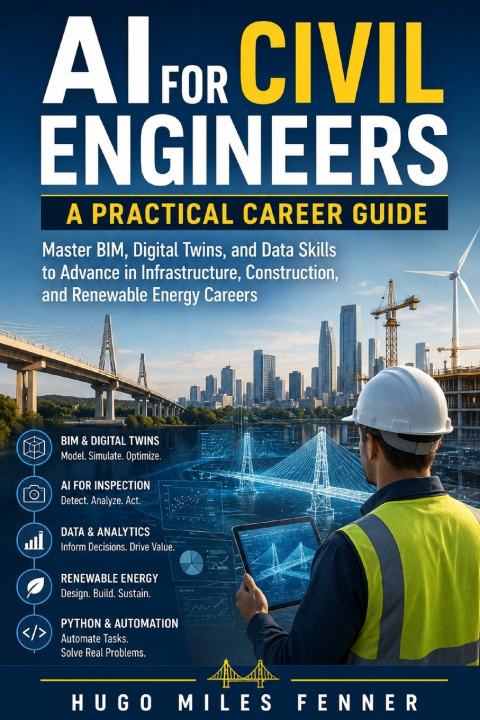
Artificial intelligence is reshaping civil engineering, infrastructure planning, construction management, transportation systems, asset inspection, renewable energy development, and the future of technical careers. But most engineers do not need hype. They need a practical, professional guide to what AI actually means for their work.
AI for Civil Engineers: A Practical Career Guide gives civil engineering students, early-career engineers, practicing professionals, construction managers, and infrastructure specialists a clear roadmap for understanding and applying AI-related skills in real engineering contexts.
This book explains how AI, machine learning, data analytics, BIM, GIS, digital twins, computer vision, structural health monitoring, and Python-based data tasks are changing the profession. It also shows readers how to build career-ready competency without becoming data scientists or losing sight of engineering judgment, licensure, safety, and professional accountability.
Inside, readers will learn how to:
Understand what AI actually means in civil engineering
Build practical data literacy for engineering workflows
Use BIM, GIS, and digital infrastructure more strategically
Understand digital twins and structural health monitoring
Explore computer vision for inspection and quality control
Apply AI concepts to construction safety, cost, and scheduling
Recognize AI opportunities in transportation and asset management
Understand geotechnical and environmental applications
Prepare for renewable energy infrastructure career growth
Use Python and scripting for engineering data tasks
Evaluate and procure AI tools responsibly
Navigate PE licensure, standard of care, and AI accountability
Build and demonstrate AI competency for career advancement
Written in a clear, practical, career-focused style, this book is ideal for civil engineers who want to stay relevant, competitive, and professionally responsible in an AI-enhanced infrastructure world.
AI will not replace engineering judgment. But engineers who understand AI will be better prepared to lead the next generation of infrastructure work.