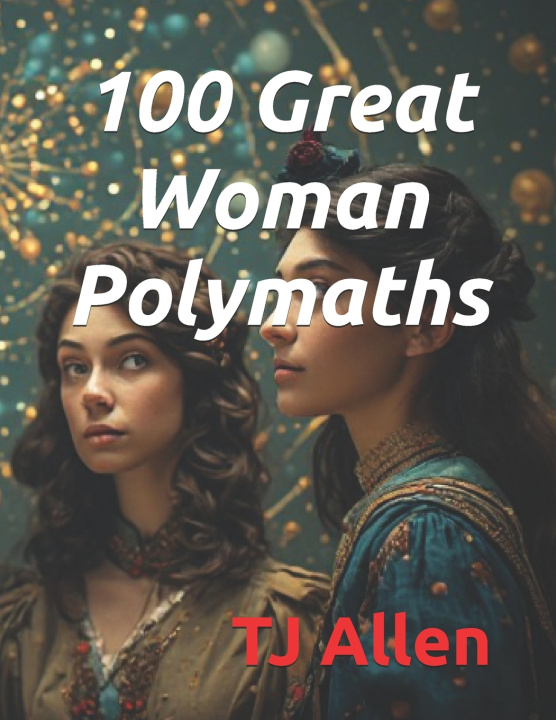
A polymath is a person who knows a suspicious amount about a ridiculous number of things.
These are the people who make the rest of us feel proud for remembering where we put the car keys. A normal person may learn a skill, practice it, improve at it, and feel useful. A polymath learns mathematics, medicine, music, law, astronomy, philosophy, poetry, politics, botany, engineering, and three ancient languages, then casually asks what everyone else did before lunch.
This book is about one hundred great women who did not fit into one category, one profession, one expectation, or one small historical box labeled "acceptable female behavior." They were scientists, artists, writers, leaders, inventors, philosophers, teachers, reformers, performers, rebels, and occasional public nuisances of the highest intellectual order. They looked at the boundaries society drew around them and treated those boundaries the way a cat treats a closed door: as an insult requiring immediate investigation.
History has always loved genius, but it has not always known what to do with women who had too much of it. A man who mastered five subjects was often called a Renaissance man. A woman who mastered five subjects was more likely to be called difficult, unnatural, dangerous, distracting, too educated, not educated enough, improper, too outspoken, too quiet, too ambitious, or "perhaps in need of a husband." History, in other words, had a rich vocabulary for being wrong.
And yet, these women kept going.